I am a great fan of e-books and audiobooks. I have listened to dozens of the latter — they are an excellent way to pass time in queues, airports, on aeroplanes, while jogging or lifting weights. The Kindle app lives on my phone and has saved me from boredom in waiting rooms across three continents. I am not here to disparage the digital format. It is convenient, portable, and often cheaper. But the paper book is what got me hooked, and no amount of convenience has managed to replace it.
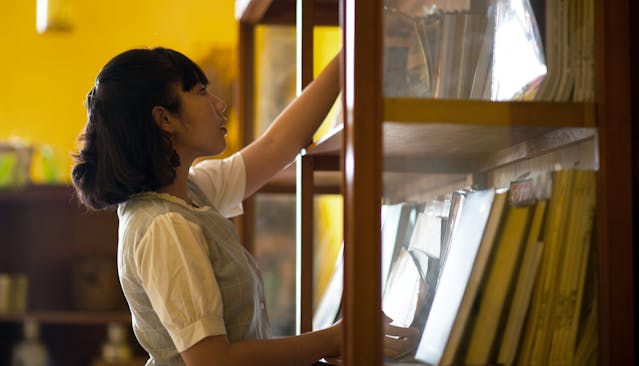
When I was a child, my parents had a large library. It filled an entire wall of our flat — fiction on some shelves, science, math and history on others. I had free rein. Nobody told me what I could or could not read, even when I was barely tall enough to reach the first shelf. I would drag a chair across the room, climb up, and pull down whatever caught my eye: adventure novels, encyclopaedias, my mother’s electrical engineering textbooks with their incomprehensible diagrams. Most of it I did not understand. That was not the point. The point was the weight of the thing in my hands, the smell of the yellowing pages, the sense that I was handling something that mattered. A book was an object. It had presence. You could not accidentally delete it.
That library shaped me in ways I am still discovering. The habit of reading, obviously — but also the habit of browsing, of letting your eye wander across spines until something unexpected catches it. You do not browse an e-reader the same way. You search, you scroll, you click on recommendations generated by an algorithm that knows your purchase history better than you do. The serendipity is gone. In a physical library, you reach for one book and notice another beside it. You pull out a novel and find, tucked behind it, a volume of essays you did not know existed. The shelf rewards curiosity in a way the screen does not.
Today I live a nomadic existence. I do not have a large library — I do not have a permanent address. My books are scattered across storage units and the spare rooms of patient friends. This is a temporary condition, I tell myself. Once I grow less restless and settle somewhere, I will install as many bookcases as the walls can hold and fill them with volumes old and new. I will become a regular at second-hand bookshops, the kind of customer who arrives with a list and leaves with a bag full of things that were not on it. The owners will know my name. I will know which shelf they keep the obscure histories and where they hide the first editions. This is the future I am working towards — not wealth, not fame, but a room with enough shelves.
I say all this as someone who has now published a book of his own. The Kindle version went live with a few clicks. I filled in the forms, uploaded the file, and watched the status change from “In Review” to “Live.” It was satisfying in the way that ticking a box is satisfying. The paperback was different. When the first printed copy arrived, I held it for a long time. I turned it over, ran my thumb along the spine, flipped through the pages to hear them rustle. It was real in a way the digital file was not. The words were the same. The experience was not.
So far, most of my readers have chosen the electronic format — for convenience, I assume, and I do not blame them. But if you are the sort of person who feels the way I do about books, I would encourage you to consider the paper edition. Read it, and when you are done, put it on your shelf alongside the other volumes that have meant something to you. A book on a shelf is a book that stays. It does not vanish when you switch devices or when a company decides to revoke your licence. It sits there, spine outward, waiting for the day you or someone else pulls it down again. That is what books are for. That is what they have always been for.