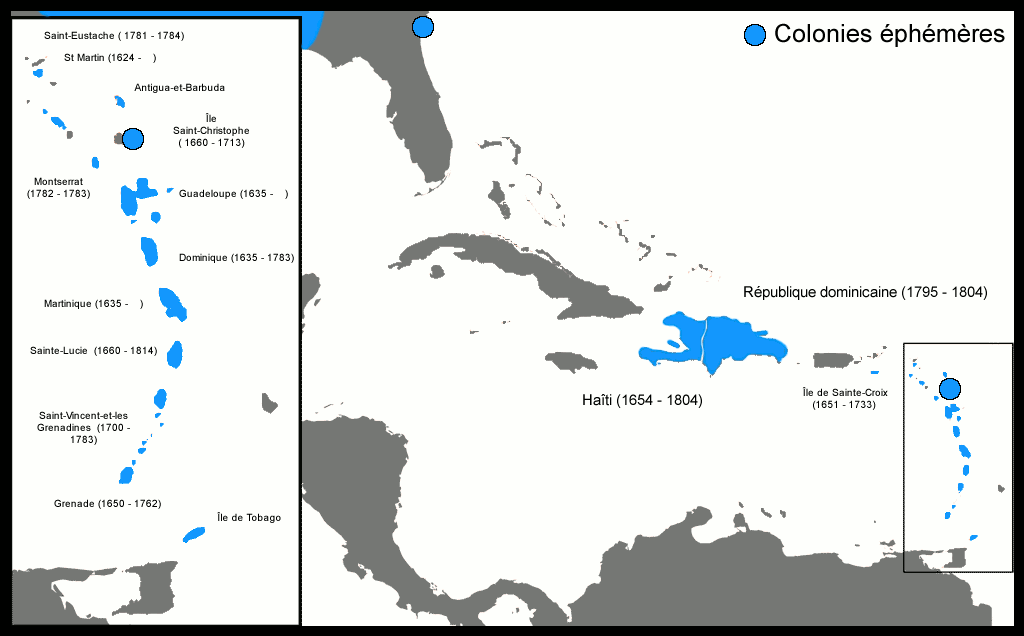
On the morning of 4th February 1794, the National Convention in Paris voted to abolish slavery throughout all French territories — a decision that transformed abstract revolutionary principles into concrete legal reality. The decree did not merely declare an ideal; it restructured the relationship between metropolitan France and its colonial possessions across the Atlantic and Indian Oceans. Yet as with many revolutionary measures, the gap between legislative declaration and practical enforcement would prove substantial, requiring decades of sustained effort to realise fully.
The Convention’s vote emerged from a decade of mounting pressure on the question of slavery. Saint-Domingue — later Haiti — had become the crown jewel of French colonial enterprise by the 1780s, producing more sugar and coffee than all other French colonies combined. The plantation economy depended entirely on enslaved labour. The social hierarchy remained rigidly stratified along racial lines. Free people of colour, many of them property owners and merchants, found themselves excluded from political participation despite their economic contributions. The slave population itself numbered in the hundreds of thousands, subjected to conditions that increasingly conflicted with the Declaration of the Rights of Man and of the Citizen adopted in 1789.
The path to abolition had been neither straightforward nor unopposed. Colonial interests in Bordeaux, Nantes, and Marseille maintained powerful lobbies in Paris, their commercial concerns often prioritising stability over reform. Plantation owners feared that emancipation would undermine productivity and profitability. Yet the revolutionary momentum proved difficult to contain. The slave revolt that erupted in Saint-Domingue in 1791 demonstrated both the potential for organised resistance and the strategic importance of colonial territories to France’s global standing. Local assemblies had already begun experimenting with gradual emancipation measures, creating precedents that informed the Convention’s deliberations.
The February decree itself was comprehensive in scope. It declared all persons within French domains free from slavery without distinction of race or colour. The language avoided conditional qualifications that might have allowed for exceptions; freedom became universal rather than partial. Implementation mechanisms included provisions for administrative oversight, ensuring that local authorities could enforce the new status across diverse colonial contexts. The Convention recognised that legal emancipation required corresponding adjustments to labour relations, property rights, and civic participation structures.
The immediate aftermath revealed both the promise and limitations of the legislative achievement. In Saint-Domingue, formerly enslaved leaders like Toussaint Louverture emerged as pivotal figures in translating policy into practice. Their work extended beyond mere administrative compliance; they reorganised plantation systems, maintained social order during periods of external threat, and cultivated relationships with metropolitan authorities. The decree’s universal language resonated with local populations who had long experienced the contradictions between revolutionary ideals and colonial realities.
However, the distance between Paris and its overseas territories presented ongoing challenges. Communication delays meant that policy directives required months to reach distant colonies, while local conditions often necessitated adaptations to central mandates. Colonial administrators operated with considerable autonomy, interpreting legislative intent through the lens of regional circumstances. The result was a patchwork of implementation patterns rather than uniform application across all French possessions. In the end, no one was completely satisfied, even the emansipated slaves themselves.
The Convention’s achievement extended beyond immediate territorial boundaries. By extending abolition to all French domains, the decree established a precedent for colonial governance that would influence subsequent policy developments. The principle of universal freedom provided a framework for addressing emerging challenges in labour relations and social integration. Colonial subjects gained recognition as full participants in the republican project rather than remaining subordinate populations under metropolitan oversight.
The historical trajectory following 1794 demonstrated both the durability and complexity of this foundational achievement. While the initial decree represented a decisive break from previous arrangements, subsequent developments tested its resilience against competing political priorities and economic pressures. The Napoleonic era would later reconfirm the commitment to abolition while adapting implementation strategies to contemporary circumstances. This continuity reflected the enduring significance of the 1794 decision as a cornerstone of French colonial policy.
The 1794 abolition established principles that outlasted subsequent political transformations, though full realisation required sustained effort across generations. In Saint-Domingue, the declaration’s ideals found their most complete expression through the Haitian Revolution, which achieved independent statehood in 1804. The broader French colonial empire continued to evolve under successive regimes, with the abolition principle remaining a touchstone for policy development. By the mid-nineteenth century, France had consolidated its commitment to universal citizenship across metropolitan and colonial territories, establishing administrative structures that facilitated ongoing engagement between diverse populations and central government.