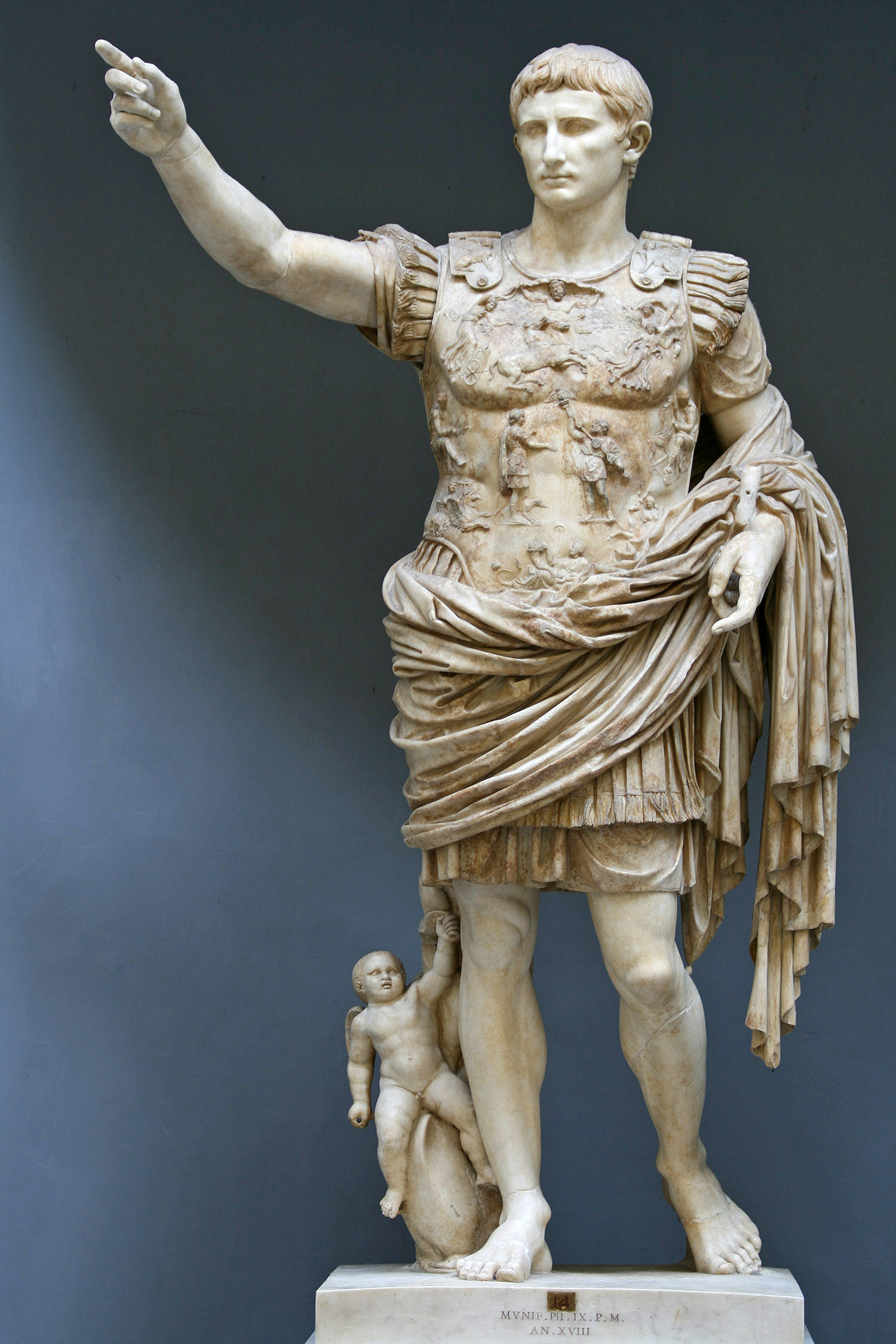
On 5 February 2 BC, a senator named Valerius Messalla rose before the full Senate and addressed the man who had ruled Rome for three decades. “Good fortune and divine favour attend thee and thy house, O Caesar Augustus,” he said. “The senate in accord with the Roman people hails thee Father of thy Country.” According to Suetonius, Augustus wept. He told the assembled senators, the equestrians, and the people’s delegation that he had nothing left to wish for.
This was, on its surface, a touching ceremony. A grateful city honouring its saviour. The old man — sixty-one years old, and not in the best of health — receiving in old age the highest honour his country could bestow. In practice it was something closer to the moment a chess player acknowledges checkmate. The board had been set for thirty years. Calling Augustus pater patriae was less an honour than a belated admission of what had been true since the Battle of Actium.
The title had a history worth knowing. During the Republic it had been granted twice. Marcus Furius Camillus received it in 386 BC after driving the Gauls out of Rome following the sack of the city — the man who literally saved Rome from burning. Cicero received it in 63 BC for suppressing the Catilinarian conspiracy, a coup attempt he uncovered and crushed while serving as consul. (Sidenote - this is a complicated affair and we will talk about it one day.) Two men in five centuries of republican history, both for specific, concrete acts of preservation. The title meant something precise: this person saved the state.
Julius Caesar had received a lesser version, parens patriae, in 45 BC. The Senate — packed with Caesar’s own supporters — gave it to him for ending the civil wars. Those would be the civil wars he had started in 49 BC by marching his legions across the Rubicon. Rome awarded him paternal honours for tidying up a mess he had made himself.
Augustus improved on this considerably. He arranged his deceptions with much more care.
When Octavian — as he was still known — defeated Antony and Cleopatra at Actium in 31 BC and became the sole master of the Roman world, he faced the same problem his adoptive father had faced and solved badly. Caesar had concentrated power openly, accepted a perpetual dictatorship, taken a golden throne in the Senate, and been stabbed twenty-three times on the Ides of March for his troubles. The Roman ruling class had a documented allergy to kings. It could be one of the corner stones of the Roman republlican ideology. Octavian took the lesson seriously.
His solution was to give Rome its republic back in every way that did not matter. On 13 January 27 BC, in what historians call the First Settlement, he staged a public return of his emergency powers to the Senate. He retained effective control of Spain, Gaul, Syria, and Egypt — which happened to be where most of the legions were — but dressed this up in the language of the Senate temporarily entrusting provinces to him for the sake of stability. He adopted the title princeps, meaning roughly “first citizen,” rather than anything that sounded like king. He refused a permanent consulship. He wore no diadem. He held no sceptre. He decorated his front door with laurels, a mark of civic honour rather than royal display, and lived with conspicuous modesty by Roman aristocratic standards. He invited senators to dinner and asked them to correct him when he was wrong.
The Senate, in return, gave him effectively unlimited tribunician power — the right to veto any law, propose legislation, and act as inviolable arbiter of all public business. He commanded twenty legions. He controlled Egypt, the bread basket of Rome, as personal property. He had the undivided loyalty of the Praetorian Guard. But none of this was a monarchy, because there was no crown. The word was never used, the Senate kept meeting, and elections kept being held. The Republic lived on in the way that a brain-dead patient on a ventilator lives on: the form preserved, the substance gone.
By 2 BC, he had been running this arrangement for thirty years. He had watched Rome transform around him — not just politically but physically. New temples, rebuilt roads, a standing professional army, a reorganised system of taxation, a fire brigade for the capital, a postal service for the empire. He liked to say, in old age, that he had found Rome a city of brick and left it a city of marble. He was not wrong. He had also found it a republic and left it a monarchy, but that particular admission did not appear in the Res Gestae Divi Augusti — the official account of his achievements he had inscribed on bronze tablets and placed outside his mausoleum.
When the title came, it did not arrive through the Senate alone. According to Augustus’s own account, the equestrian order asked for it first, then a crowd at a theatrical performance, and finally the full Senate — at which point Messalla delivered his prepared speech and Augustus wept his prepared tears. The whole sequence reads like something arranged well in advance. It probably was. By the time he received it, the title was not recognition of a specific act but ratification of an entire regime. The man who had dismantled the Republic had been granted the old Republic’s highest honour for having done so.
He lived another sixteen years after that ceremony, dying at Nola in AD 14 at the age of seventy-five. The Senate deified him. His successor Tiberius, offered the same title, declined it as premature and inappropriate. He had perhaps read the ceremony more clearly than most.
Camillus earned the title by driving out the Gauls. Cicero earned it by stopping a coup. Augustus earned it by running one for three decades, competently enough and ruthfully enough that nobody dared to call it that.