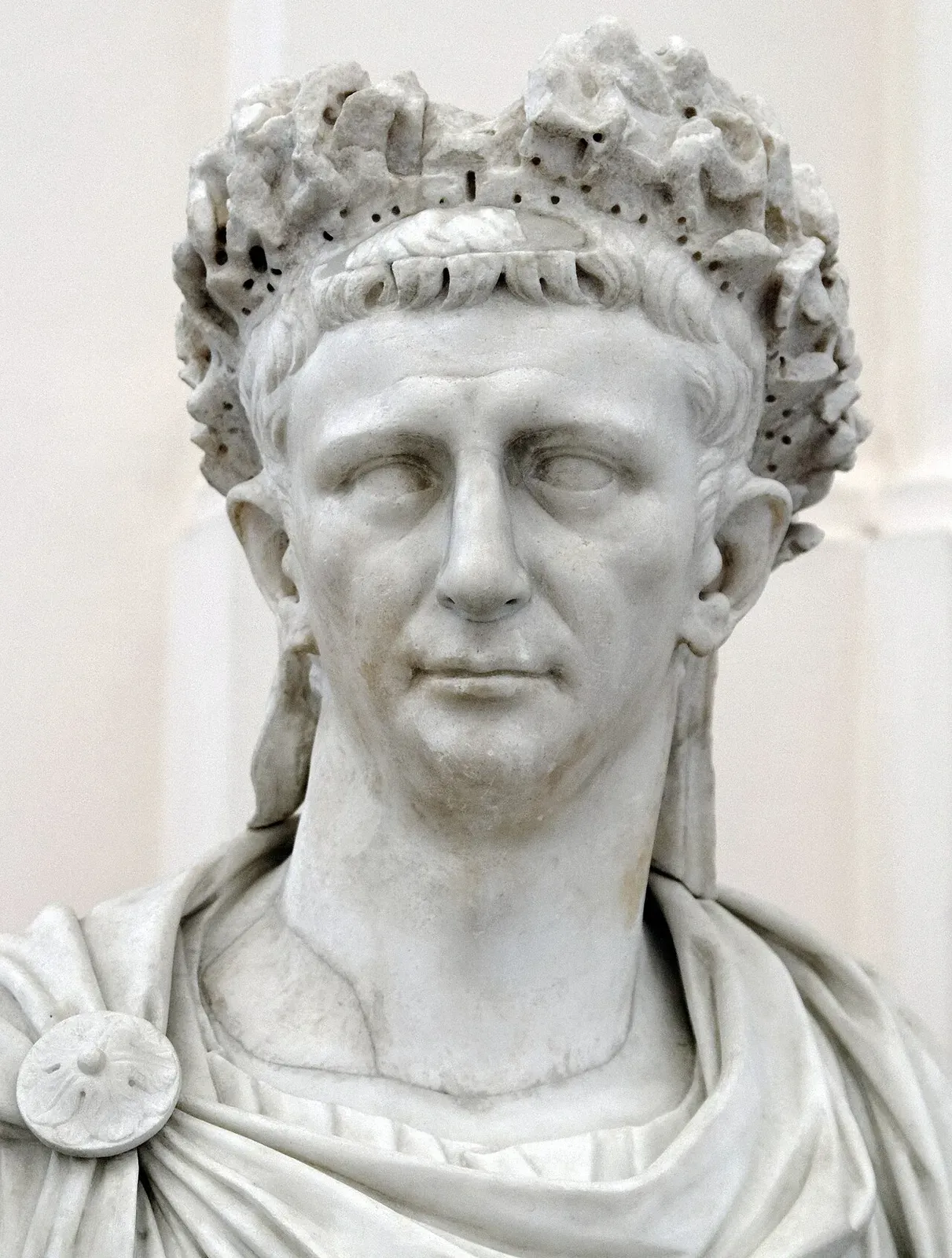
On 24 January AD 41, Gaius Caesar Augustus Germanicus - the emperor we call Caligula - was cut down in a palace corridor. The assassins were officers of his own household troops. What followed was not a restoration of the old Republic, whatever a few panicked senators may have muttered in the chaos, but another lesson in where Roman power actually lived. The Praetorian Guard found Caligula’s uncle, Tiberius Claudius Caesar Augustus Germanicus, hiding. According to the story that stuck, they dragged him from behind a curtain. Hours later he was emperor.
Claudius was an unlikely candidate in every sense the Roman elite cared about. He had been born at Lugdunum in Gaul, outside the Italian heartland that snobs liked to treat as the only serious birthplace. He limped, he shook, his speech could be difficult. His mother had reportedly called him a monster; his ambitious relatives parked him on the margins while they fought for the prize. Under Tiberius he survived by being bookish and apparently harmless. Under Caligula he survived the same way. That was the skill set Rome suddenly needed at the top: a man nobody bothered to kill because nobody thought he mattered.
The Guard’s role in his accession was a scandal to the Senate. Claudius was the first emperor whose legitimacy rested, in plain daylight, on soldiers in Rome rather than on a carefully staged senatorial vote. Aristocratic writers never forgave him for it. They painted him as a fool, a slave to his freedmen secretaries, a dupe of women. Some of that was politics. Some of it was cruelty. None of it quite explains how the same man could stabilise the finances after Caligula’s theatrical spending, hear cases in public, issue detailed edicts on law and slavery, and preside over a bureaucracy that actually answered letters.
He was not a battlefield genius in the mould of Julius Caesar, but he understood what Roman rulers needed on the map. In AD 43 he ordered the invasion of Britain - the project Caesar had begun and never finished - and later crossed the Channel himself to stage a triumph for a war others had largely won. At home he built on a serious scale: the Aqua Claudia and Anio Novus aqueducts, a new harbour complex at Portus to secure the grain fleet, the physical infrastructure that kept the capital fed and watered. He also shifted real authority into the hands of trusted freedmen - Narcissus, Pallas, and the rest - which made government work faster and made senators furious. Efficiency and dignity do not always travel together.
If his administration was sharper than his public image suggested, his private life was a running advertisement for poor judgment. Four marriages, a third wife executed for conspiracy, a fourth who was his niece - Agrippina the Younger - and who is widely thought to have poisoned him so her son Nero could succeed. The domestic soap opera would be laughable if the stakes were not the succession of the Mediterranean world. Claudius did not die ignorant of palace politics. He simply proved better at running an empire than at choosing who could be trusted beside his bed.
The literary sources that shape our picture - Suetonius, Tacitus, the senatorial tradition - were often hostile. Modern historians tend to be kinder, not out of sentiment but because the record of what got built, adjudicated, and taxed during his reign from AD 41 to 54 is hard to dismiss as accident. Rome asked for a punchline on the day the Praetorians pulled a trembling scholar from his hiding place. It received, instead, one of the harder-working administrators of the early empire - flawed, odd, and still an improvement on the nephew who had worn the purple before him.