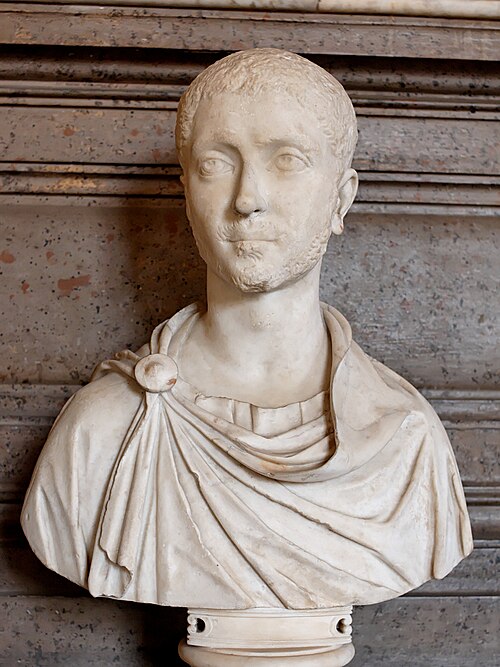
On 22 March 235, the Roman Empire stood at a precipice. Emperor Severus Alexander lay dead near Mogontiacum (modern Mainz), his body pierced by the very soldiers he had sought to appease through diplomacy rather than force. His death marked not merely the end of an individual reign but the collapse of a system that had sustained imperial stability for nearly two centuries. The assassination triggered a chain reaction that would reshape the Roman world for generations, ushering in what historians now call the Crisis of the Third Century - a period of profound transformation that bridged classical antiquity and the medieval era.
The Severan dynasty had maintained imperial power through careful attention to military loyalty. Septimius Severus, the dynasty’s founder, had recognized early on that the army required substantial financial incentives to remain faithful. He raised legionary pay and provided generous donatives - cash bonuses - to secure troop allegiance. This policy proved effective for several decades but created an unsustainable expectation: the military increasingly demanded larger bribes as a condition of their loyalty.
Severus Alexander inherited this delicate balance but faced mounting pressures that tested its limits. The emperor found himself compelled to prioritize diplomatic solutions over military conquest, particularly regarding Germanic tribes encroaching on Rome’s northern frontiers. According to the historian Herodian, Alexander’s approach - accepting tribute and pursuing peaceful accommodation rather than imposing severe punitive measures - cost him the respect of his troops. These soldiers, hardened by years of frontier service, felt that more decisive action was warranted against tribes that had repeatedly intruded upon Roman territory.
The consequences proved fatal. Leading his armies personally in Germania Superior, Alexander found himself unable to satisfy the growing demands for military prestige and advancement. The troops, already accustomed to substantial financial rewards, now sought recognition through martial achievement as well. When diplomatic efforts failed to deliver the expected victories, the emperor’s standing among his soldiers deteriorated precipitously.
The crisis culminated in 235 when Maximinus Thrax, a commander of one of the legions present during Alexander’s campaign, seized the initiative. A native of Thracia with humble origins - earning his nickname “Thrax” (the Thracian) - Maximinus represented a new model of imperial leadership: the barracks emperor. Unlike previous rulers who had relied on political experience, established factions, distinguished ancestry, or hereditary claims to the throne, Maximinus rose through military merit alone.
The soldiers proclaimed their commander emperor in a mutiny that directly challenged Severus Alexander’s authority. This moment marked a decisive shift from dynastic succession to military acclamation as the primary mechanism for imperial legitimacy. The troops’ action reflected a broader transformation: power increasingly rested not on senatorial approval or hereditary right but on brute force and generalship.
Maximinus’s proclamation triggered immediate consequences. The emperor, now facing both internal dissent and external threats, found himself compelled to confront the very forces that had elevated him. His response - marching toward Rome with loyal legions while simultaneously addressing Germanic incursions - demonstrated the operational demands placed upon these new warlord-emperors. However, Maximinus’s peasant origins initially displeased the Senate, which viewed his elevation as a departure from traditional aristocratic governance.
The assassination of Severus Alexander set in motion events that would define the early crisis period. Within months of the emperor’s death, the Roman world witnessed unprecedented political turbulence. Maximinus’s ascent prompted a series of rival claims to imperial authority, culminating in what became known as the Year of the Six Emperors (238 AD).
The year began with a revolt in Africa led by Gordian I and his son Gordian II - nearly eighty-year-old Marcus Antonius Gordianus Sempronianus Romanus “Africanus” and his forty-six-year-old successor. Both proclaimed joint emperors against Maximinus’s authority, receiving immediate recognition from the Roman Senate. The Gordians’ rebellion quickly gained momentum, though their triumph proved short-lived. Gordian II fell in battle at Carthage against forces loyal to Maximinus, while his father committed suicide upon learning of his son’s death.
In response to these developments and fearing Maximinus’s wrath, the Senate elevated two of its own members - Pupienus and Balbinus - as co-emperors. Simultaneously, they designated Gordian I’s grandson, Gordian III, as Caesar. This arrangement represented an attempt to balance senatorial interests with military realities while maintaining dynastic continuity through the Gordian lineage.
The year concluded with dramatic developments that tested the fragile imperial structure. Maximinus marched on Rome but met his end through assassination by his own troops following the Siege of Aquileia. The Senate’s co-emperors, Pupienus and Balbinus, subsequently faced their own fate when they were murdered by the Praetorian Guard only one month after Maximinus’s death. Thus, within a single year, six individuals had claimed or held the imperial title - each representing different factions and approaches to governance.
The crisis period witnessed the rise of what historians term “barracks emperors” - rulers elevated by military forces without traditional political credentials. These leaders operated as warlords whose authority rested fundamentally on military might rather than senatorial endorsement or hereditary succession. Their rule reflected a broader transformation in imperial governance: power increasingly emanated from the field armies rather than the capital’s administrative centers.
Maximinus exemplified this new model of leadership. His humble origins and reliance on military support distinguished him from previous emperors who had drawn legitimacy from senatorial approval or dynastic connections. As his reign demonstrated, barracks emperors required constant attention to frontier defense while maintaining the loyalty of their forces through personal engagement and shared military objectives.
The subsequent decades saw numerous Roman generals competing for imperial control while simultaneously addressing external threats. Frequent raids across the Rhine and Danube frontiers by foreign tribes - including the Carpians, Goths, Vandals, and Alamanni - demanded sustained military attention. Simultaneously, the Sasanian Empire in the east presented an increasingly formidable challenge, having recently overthrown the Parthian Arsacids and penetrating Roman territory with strategic acquisitions of key cities such as Nisibis and Carrhae.
The political upheaval coincided with profound economic changes that would reshape the Roman world. The crisis period witnessed severe disruption to the empire’s extensive internal trade network, which had flourished under the Pax Romana since Augustus established imperial peace in 27 BC. Merchants had previously traveled safely across vast distances, moving agricultural goods from provincial regions to urban centers and distributing manufactured products from eastern cities to rural populations.
The widespread civil unrest rendered long-distance commerce increasingly hazardous, while currency debasement - accelerated by the need to fund military expenditures - complicated financial transactions. The denarius, which had served as the empire’s primary silver coin for three centuries, suffered severe devaluation that nearly collapsed by the time Diocletian assumed power in 284. This monetary deterioration forced a transition toward in-kind taxation and bullion-based valuation systems.
Large landowners, no longer able to export crops over extended distances due to disrupted trade routes, increasingly turned toward subsistence production and local barter. Rather than importing manufactured goods from imperial urban centers, they began producing many necessities on their estates - a development that foreshadowed the self-sufficient “house economy” characteristic of medieval feudalism. This economic decentralization marked a fundamental shift in the empire’s structure, as commercial middle classes waned alongside declining trade networks and common citizens migrated toward rural areas seeking security and sustenance.
The crisis period also witnessed natural disasters that compounded existing challenges. From 249 to 262, the Plague of Cyprian - possibly smallpox - devastated the Roman population, causing widespread mortality that severely weakened imperial capacity. Some cities, including Alexandria, experienced population declines exceeding 60%, while agricultural productivity suffered as abandoned farms reduced food production capabilities.
Climate variability further exacerbated these difficulties. Drier summers diminished agricultural output and increased extreme weather events, contributing to instability in rural economies. These environmental pressures likely intensified barbarian migration patterns, as affected regions pushed populations toward more productive Mediterranean areas. The resulting demographic shifts altered settlement patterns and economic relationships throughout the empire.
The plague’s impact extended beyond immediate mortality, affecting military recruitment and operational capacity. Reduced manpower strained the army’s ability to maintain frontier defenses while simultaneously addressing internal security requirements. This constraint necessitated increased reliance on barbarian mercenaries - foederati - who gradually assumed greater roles in imperial defense and administration.
By 260, the cumulative pressures had precipitated a significant reorganization of imperial authority. Following the capture of Emperor Valerian by Sasanian forces at Edessa - an unprecedented military disaster - the empire fragmented into three competing polities that functioned as distinct political entities while maintaining nominal unity under Roman sovereignty.
The Gallic Empire emerged in 260, encompassing Gaul, Britannia, and briefly Hispania under the leadership of Postumus, a governor who had been proclaimed emperor following military victories against Germanic threats. This breakaway state established Trier as its capital and maintained its own succession of emperors, consular elections, and administrative structures.
Simultaneously, the eastern provinces of Syria, Palestine, and Aegyptus became independent as the Palmyrene Empire under Odaenathus and his wife Zenobia. This polity controlled critical territories extending from Egypt through Syria and into Asia Minor, positioning itself as a semi-independent entity within the broader Roman framework while maintaining loyalty to the central imperial authority.
The remaining provinces centered on Italy continued under direct imperial rule but faced intensified threats on multiple frontiers. This tripartite division represented not merely administrative convenience but reflected genuine political and economic differentiation that had developed across the empire’s vast territories.
The crisis reached its zenith during the reign of Aurelian (270–275), whose military successes marked a decisive turning point in the restoration process. Aurelian, who had commanded cavalry forces at the pivotal Battle of Naissus against Gothic invaders, successfully reunited the fragmented empire by defeating both breakaway states and reestablishing centralized authority.
His reign demonstrated the effectiveness of energetic barracks emperors in restoring imperial cohesion through sustained military campaigns. Aurelian’s victories over the Vandals, Goths, Palmyrene Empire, and Gallic Empire gradually consolidated the realm into a unified entity by late 274. His achievements earned him the title “Restitutor Orbis” (Restorer of the World), reflecting his unprecedented series of military triumphs that reestablished Roman dominance across the empire’s territories.
Aurelian’s reforms extended beyond territorial reunification to address fundamental structural challenges. He initiated comprehensive measures to restore economic stability, including the construction of defensive fortifications around Rome itself - a testament to the changed security requirements that had rendered previously fortified cities unnecessary for centuries. His currency reforms and administrative innovations laid foundations for sustained imperial recovery.
The crisis period’s culmination arrived with Diocletian’s accession in 284, which formally concluded the era of military anarchy and initiated a new phase of imperial governance. Born to humble origins in Dalmatia, Diocletian represented the continuation of the barracks emperor tradition while introducing radical reforms that addressed the systemic challenges exposed by the crisis.
Diocletian’s restructuring fundamentally transformed imperial administration through the establishment of the Tetrarchy - a system of four co-emperors that distributed authority across the empire’s vast territories. This innovation broke the cycle of usurpation that had characterized the preceding decades and provided a more stable framework for managing multiple simultaneous threats. The formal adoption of the title “dominus” (lord) by Diocletian and his successors marked a definitive transition from the Principate’s republican facade toward a more explicitly monarchical form of government.
The crisis period’s profound transformations extended beyond political structures to encompass social, economic, and religious dimensions. The shift from urban-centered administration to military-focused governance altered power dynamics throughout the empire, while the emergence of semi-independent regional centers anticipated medieval patterns of decentralized authority. These developments collectively marked the transition from classical antiquity toward late antiquity - a historical period characterized by distinctive institutional arrangements and societal organization that would endure for centuries.
The Crisis of the Third Century’s significance extends far beyond its chronological boundaries. More than a century elapsed before Rome again experienced comparable military challenges, yet the transformations initiated during this period proved enduring and foundational to subsequent imperial development. The crisis established patterns of governance, economic organization, and social structure that would characterize medieval European civilization.
The empire’s survival through these tumultuous centuries demonstrated remarkable resilience, with the Western Roman Empire persisting until 476 and the Eastern continuation enduring until 1453. The institutional innovations and adaptive responses developed during the crisis period provided the framework for this prolonged existence, enabling the Roman world to navigate profound changes while maintaining continuity of imperial authority.
The assassination of Severus Alexander on that fateful day in March 235 thus represents not merely a historical event but a watershed moment that initiated a transformative process reshaping the ancient world’s political, economic, and social landscape. The crisis that followed fundamentally altered the trajectory of Roman development, establishing patterns of governance and organization that would influence European civilization for generations to come.
The legacy of this period endures in contemporary understanding of how institutional adaptation, military leadership, and economic flexibility can sustain complex societies through profound challenges - a lesson as relevant today as it was to the Roman emperors who navigated one of history’s most consequential periods of transformation.