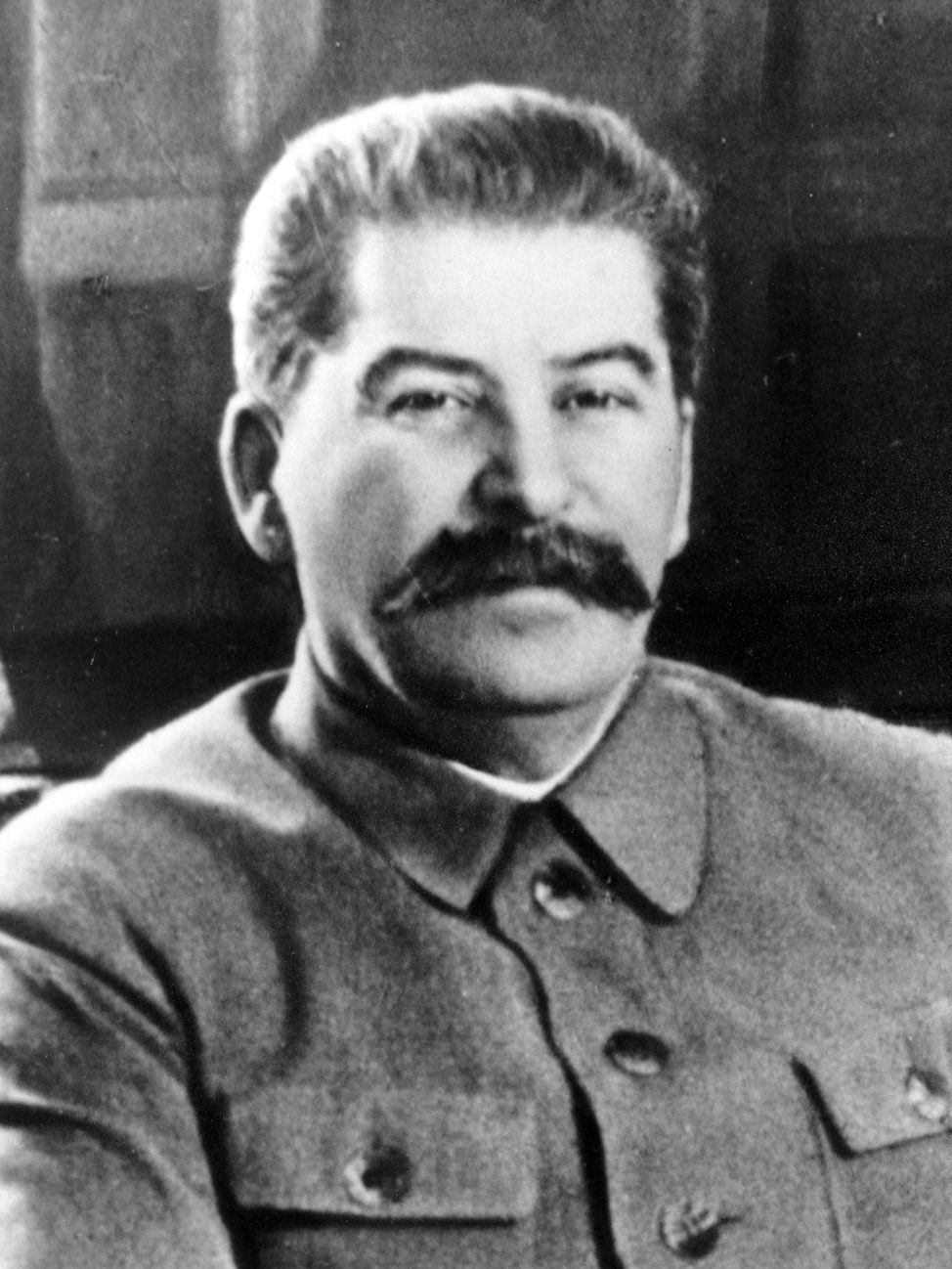
On the morning of 1 March 1953, the guards stationed at Stalin’s private dacha at Kuntsevo faced a problem they were not equipped to solve. The general secretary had not emerged from his rooms. His lights had gone off the previous night. Nobody had heard anything. Entering uninvited was not an option — the last man known to have disturbed Stalin without permission had been sent to a labour camp — so the guards waited, and the hours accumulated, and it was not until around eleven at night that one of them finally went inside. Stalin was lying on the floor in his own urine, barely conscious, unable to speak. Doctors were summoned the following morning. He died on 5 March 1953, at 9:50 in the evening, of a cerebrovascular accident. He was seventy-four.
The delay in calling doctors was not entirely coincidental. In January 1953, the Soviet press had announced the “Doctors’ Plot” — an alleged conspiracy by a group of mostly Jewish physicians to murder senior Soviet officials. Nine doctors had been arrested, beaten, and coerced into confessions, and were awaiting a show trial that many historians believe was the prelude to another mass purge. The country’s most capable physicians were in detention when Stalin needed them. The men who eventually attended him were frightened, second-tier replacements, working under the eyes of officials who could have them arrested for saying the wrong thing.
This was, in its bleak way, characteristic. Stalin had spent three decades building a system in which every institution deferred to him, every official feared him, and every decision waited on his approval. The consequence was a regime that could mobilise millions and build nuclear weapons but could not get a doctor to a dying old man without bureaucratic terror intervening. The system worked precisely as designed, right to the end.
Born Ioseb Jughashvili in Gori, Georgia, in December 1878, he was not Russian and never convincingly became one. Georgian was his mother tongue; he spoke Russian with a pronounced accent throughout his life, softening consonants and transposing sounds in ways his colleagues noticed and remembered. His father was a cobbler and sometime drunk who beat him badly enough that the young Ioseb was left with a partially withered arm. His mother sent him to the Tiflis Theological Seminary at sixteen, hoping to make a priest of him. He left — or was expelled, the records are ambiguous — five years later, having found a more compelling faith in the writings of Marx and Lenin.
He rose through the underground Bolshevik networks by doing what no one else wanted to do: the violent, logistical work. He organised bank robberies to fund the party. The most famous, the Tiflis expropriation of June 1907, netted 341,000 roubles, an absolute fortune in those times, and killed forty people. He was arrested eight times between 1902 and 1917, exiled to Siberia six times, and escaped five of those exiles. He adopted the name Stalin — man of steel in Russian — around 1912. It was an accurate self-assessment.
After the Bolsheviks seized power in October 1917, Stalin was appointed General Secretary of the Communist Party in April 1922. The job was administrative. Lenin saw him as a useful organiser; the position was not considered prestigious. Lenin was already ill, and in December 1922 he dictated a memorandum recommending that Stalin be removed from the role because he was “too rude” and had “concentrated an enormous power in his hands.” Lenin died in January 1924. The memorandum was suppressed.
By 1929, Stalin had outmanoeuvred every rival — Trotsky driven into exile and later murdered in Mexico, Zinoviev and Kamenev shot, Bukharin shot — and was effectively the unchallenged ruler of the Soviet Union. What followed was one of the most systematic programmes of state violence in the twentieth century. Collectivisation, imposed between 1929 and 1933, destroyed the peasant farming economy and killed somewhere between five and eight million people, the majority of them in Ukraine, where the famine was most severe and, many historians argue, was deliberately intensified. The Great Purge of 1936–38 killed at least 750,000 people — mostly shot in the back of the head in basements — and sent millions more to the gulag system, which at its peak held around one and a half million prisoners at any given time.
Then came the war. Stalin had signed the Molotov-Ribbentrop Pact with Germany in August 1939, carving up Eastern Europe and buying himself what he believed was time. He received dozens of warnings in the spring of 1941 that Germany was preparing to invade. He dismissed them all. When Operation Barbarossa began on 22 June 1941, the Red Army was caught almost entirely unprepared — three million Soviet soldiers were killed, wounded, or captured in the first six months. By several accounts, Stalin retreated from his office for days, close to a psychological collapse. He recovered. The Soviet Union won the war, but at a cost that staggers any attempt at comprehension: roughly twenty-seven million dead, twelve to fourteen million of them civilians. The country was in ruins.
Despite the losses, he emerged from the war with enormous prestige, which he used to tighten the system further. Purges resumed. Suspicion fell on Jews, on soldiers who had been captured, on anyone who had spent time outside Soviet territory. He was seventy-three, physically declining, and apparently preparing another wave of arrests when the stroke intervened.
His death created a problem for the leading figures of the state standing around the body. They were terrified both of what would happen if he recovered and of what would happen next if he did not. Lavrentiy Beria, the notorious head of the secret police, was reportedly the most visibly relieved man in the room when Stalin died. But in the ensuing power struggle he was arrested four months later and shot in December 1953.
The transition from one of the century’s most absolute rulers could easily have become a blood bath. It was partly that, but it was also — unavoidably — farcical. Armando Iannucci’s 2017 film The Death of Stalin captures this better than any history book I have read on the subject. The terror and the comedy are not two separate things in that film; they are the same thing, the inevitable product of a system in which nobody could tell the truth to anyone with power, and where power was suddenly, shockingly unoccupied. The film was banned in Russia. The Russians understood it perfectly.