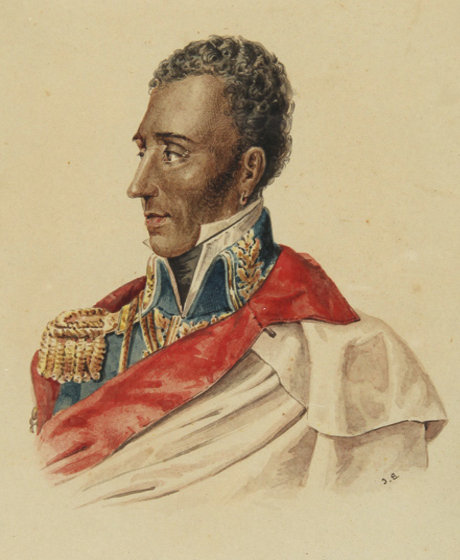
On 9 February 1822, Jean-Pierre Boyer rode into Santo Domingo at the head of 12,000 Haitian soldiers. At the formal reception in the main plaza, he declared that he had not entered the city as a conqueror, but by the will of its inhabitants. Then he proclaimed the abolition of slavery. It was a remarkable opening move.
Boyer had reasons for everything he did. The eastern portion of Hispaniola had declared independence from Spain on 1 December 1821 - a republic that had survived approximately ten weeks before Boyer showed up. Its governor, José Núñez de Cáceres, handed over the keys to the city. The frontier provinces had already raised the Haitian flag weeks earlier. The new state had no army worth the name, no tax revenues, and no credible external sponsor; it had petitioned Gran Colombia for union and been ignored. Boyer had been watching from Port-au-Prince, and when the moment arrived he moved fast.
His logic was coherent, if convenient. Haiti’s constitution declared the island “one and indivisible.” A fragile, unstable neighbour was an invitation to French or Spanish reoccupation that independent Haiti could not tolerate - both powers still resented the revolution that had driven them out. Boyer had also just reunified the Haitian state itself after a decade in which the northern kingdom under Henri Christophe and the southern republic had fought each other to exhaustion; Christophe had shot himself with a silver bullet in 1820, and Boyer had absorbed his territory two years before. The man had momentum, and he used it.
What followed was twenty-two years of rule that managed to be simultaneously abolitionist and extractive in equal measure. Boyer’s first act in Santo Domingo was genuine: slavery, which had been reinstated in the east after the Spanish returned in 1809, was abolished for good. Enslaved people from Puerto Rico and Martinique escaped to Santo Domingo precisely because it was now free. Six thousand Black Americans, recruited by the American Colonization Society with Boyer’s enthusiastic cooperation, sailed from New York, Baltimore, and Philadelphia in 1824 to settle in Samaná. On the measure of 1822, turning the entire island into a free Black republic - at a moment when every other Caribbean colony remained under European control - was not a small thing.
The other side of the ledger was considerably worse. Boyer had agreed in 1825 to pay France 150 million gold francs - later reduced to 60 million - as compensation to former slaveholders, in exchange for French recognition of Haitian independence. Haiti paid reparations to the country that had enslaved it. Boyer needed money, and the Dominicans were available to provide it. Heavy taxes followed. Since the Haitian army could not reliably feed itself, it commandeered food at gunpoint. Land reform disrupted the communal tenure system that Dominican rural life was built around. A Code Rural introduced by Boyer’s aide Joseph Balthazar Inginac in 1838 tied peasants to estates and restricted their movement - conditions that bore uncomfortable similarities to the system Boyer had nominally abolished. Haiti’s constitution barred white elites from owning land, so the landowning families either fled to Cuba and Puerto Rico or were dispossessed by Haitian officials who quietly acquired their properties.
The University of Santo Domingo - the oldest in the Western Hemisphere, founded in 1538 - was closed on the grounds of being a subversive organisation and stayed closed. The Catholic Church, which Haitians associated with French slave-masters rather than with spiritual life, lost its property, its foreign clergy were deported, and its ties to Rome were severed. Boyer’s administration imposed French as the official language on a Spanish-speaking population. The cumulative effect was less a liberation than a replacement of one metropolitan imposition with another, and the Dominicans noticed.
By 1838, a group of educated nationalists had formed a secret society called La Trinitaria, led by Juan Pablo Duarte, Francisco del Rosario Sánchez, and Matías Ramón Mella, and committed to Dominican independence. Boyer’s successor Charles Rivière-Hérard discovered them and exiled or imprisoned their leaders - a strategic error of the first order. On 27 February 1844, with Rivière-Hérard tied down by an internal Haitian revolt he could not contain, the Trinitarios moved. The gates of Santo Domingo rang with gunfire before dawn. By morning the Haitian garrison had surrendered. The Dominican Republic was proclaimed.
I find the 1822 occupation impossible to reduce to either of the simple stories told about it. It was the furthest reach of the Haitian Revolution’s radical claim that a Black-led republic had the right to govern itself and abolish slavery on its own terms - a genuinely extraordinary thing in the world of early 19th century. It was also a 22-year extraction that closed universities, expelled clergy, taxed peasants into submission, and handed its army licence to take what it needed from the people it ruled. Both of these things are true, and the inability to hold them together is why the history of Hispaniola remains so charged.
Boyer entered Santo Domingo saying he had not come as a conqueror. The Dominican Republic that emerged from his occupation defined itself, for generations, almost entirely in opposition to Haiti. The island has been having this argument ever since.