The organisers served wine. They also brought confectionary - a spiced mixture covered in honey - to help the audience manage their stomachs. A requiem was read before it was done, and the body was buried with proper ceremony afterward. What happened in between was the first anatomical dissection north of the Alps.
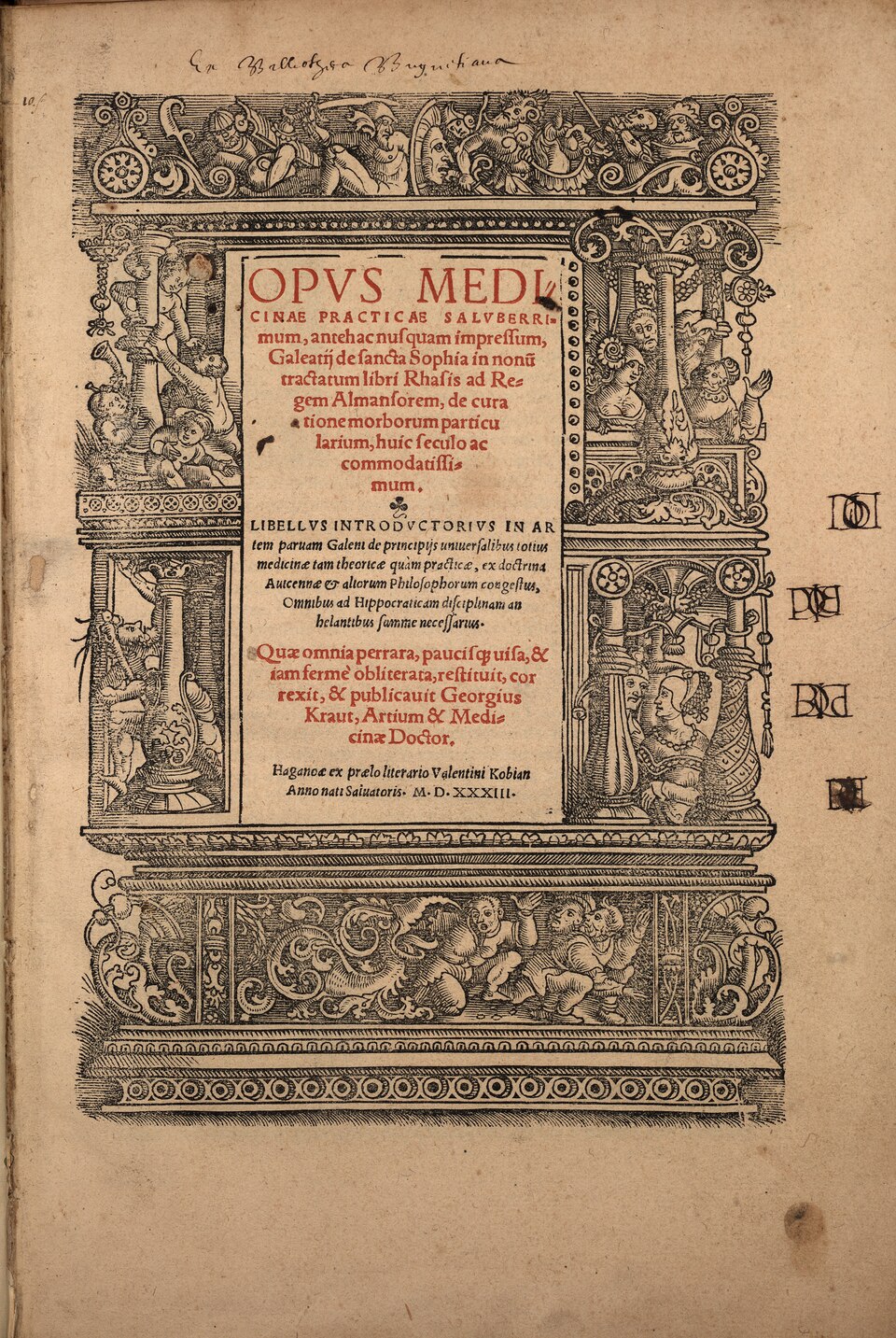
The date was 12 February 1404. The venue was the Heiligengeist Hospital in Vienna - a charitable institution founded in the 13th century to care for the poor, and an unlikely setting for a medical milestone. The man who opened the body was Galeazzo di Santa Sofia, an Italian professor of medicine who had taught at Bologna and Padua and had been brought to Vienna to introduce anatomy to its university. The University of Vienna was, at that point, thirty-nine years old. Its medical faculty was younger still. Galeazzo was importing a practice that had been established in northern Italy for nearly a century.
Bologna had been first. The city’s medical school had been ordering post-mortem examinations since 1302, when the first clearly documented judicial autopsy took place there. Mondino de Luzzi, who taught at Bologna in the early fourteenth century and is sometimes called “the restorer of anatomy”, performed his first systematic public dissection in 1315, using the body of an executed criminal before an audience of students and spectators. He turned the event into a text - his Anatomia, completed in 1316 - which remained the standard teaching manual for European medical schools until well into the sixteenth century. Padua followed the same tradition. Pietro d’Abano, who taught there in the late thirteenth century, had performed the first recorded autopsy in Padua. By the time Galeazzo left for Vienna, Italian medical schools treated dissection as a routine, if still ceremonial, part of a physician’s education.
The idea that the Church had simply banned the practice is a persistent myth. Frederick II’s imperial decree of 1231 already permitted physicians at approved medical schools to dissect human bodies. What the Church required was that the remains be treated with proper respect - a requirement that the ceremonies surrounding dissection were designed to fulfil. The wine was practical; the requiem was doctrinal; the whole affair was careful to present itself as conducted in, as one contemporary announcement put it, “the honour of God, for the benefit of mankind.” That announcement, circulated to attract an audience, promised attendees the chance “to see internal and external body parts, and to hear their names and explanations.” Admission was not free. The fee charged at Vienna’s 1404 dissection, once expenses were covered, left enough surplus to purchase a seal for the Faculty of Medicine - a pleasing coda: the first autopsy in Vienna helped pay for the university’s administrative necessities.
Galeazzo’s audience included the doctors of the Faculty of Medicine, various scholars the records call scolares, and anyone else who could afford the entrance fee. In subsequent years, the University archive records dissections drawing students from multiple faculties, clerics, and non-academic healers. The bodies used were those of executed criminals, a restriction that held in Vienna until the mid-seventeenth century. The dissections took place in the hospital’s bathhouse, which was apparently large enough to accommodate a paying crowd, and the remains were buried afterward in the St Antonius Cemetery attached to the hospital.
The hospital itself did not survive. The Heiligengeist Hospital was destroyed during the first Ottoman siege of Vienna in 1529 and never rebuilt. The site is now occupied by the Technical University of Vienna, which has no anatomical theatre.
What Galeazzo brought across the Alps was not, strictly speaking, new knowledge. The information about human anatomy available in 1404 was largely what Galen and his successors had compiled in late antiquity, and Galeazzo was teaching from those same texts. What was new was the method: the commitment to looking at an actual human body as a way of verifying and extending what the texts described. That commitment was still contested enough that the ceremony surrounding it - the wine, the confections, the requiem, the careful framing as divinely sanctioned - was necessary to make it acceptable. A century later, Andreas Vesalius, who also taught at Padua, produced his De humani corporis fabrica (1543), which corrected hundreds of Galen’s errors by the simple method of looking more carefully. Vesalius had predecessors. Galeazzo was one of them.
The body in the Heiligengeist Hospital on a February morning in 1404 was a teaching aid - expensive to obtain, ritually handled, consumed by an audience who had paid for the privilege of seeing it opened. What the audience learned is unrecorded. That they gathered at all, north of the Alps, wine in hand, to watch a man from Padua demonstrate the contents of the human body, tells you that medicine was beginning to trust its own eyes.