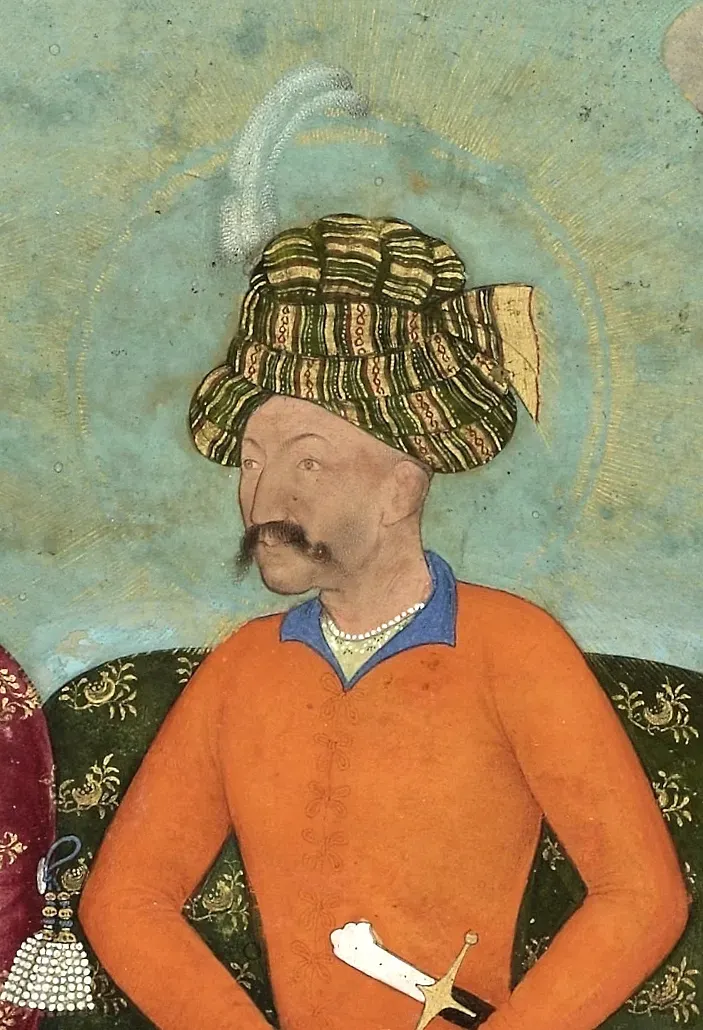
If you want a ruler who proves that state-building and cruelty often travel together, Shah Abbas I is your man.
When Abbas took the Safavid throne in 1588, the empire looked less like a great power and more like a patient in intensive care. The Ottomans were pressing from the west, the Uzbeks from the east, and the Qizilbash tribal chiefs who had created Safavid power were now busy paralysing it. Abbas inherited a crown, yes, but mostly he inherited a mess.
He fixed it with speed and violence. First he bought time - making peace with the Ottomans so he could deal with the Uzbeks. Then he rebuilt the army. Instead of relying on tribal cavalry with divided loyalties, he created a standing force of ghulams, musketeers, and artillery under direct royal control, eventually around 40,000 strong. Firearms and discipline did what dynastic prestige could not: they gave the shah the means to win battles and enforce obedience.
The military reforms worked. Abbas pushed the Uzbeks back in Khorasan, then turned west and clawed territory from the Ottomans, including much of Azerbaijan and the Caucasus. In the Gulf, he expelled Portuguese influence from Hormuz with English naval help and strengthened Safavid control over maritime trade routes. For a state that had looked close to collapse, this was a full strategic recovery.
Then he moved the capital to Isfahan in 1598 and turned politics into architecture. Naqsh-e Jahan Square, the Shah Mosque, caravanserais, bridges, workshops - this was not decorative vanity, it was a programme. Isfahan sat at the centre of overland and regional trade, and Abbas wanted a capital that projected order, wealth, and permanence. He got one. European travellers wrote about it with the sort of awe usually reserved for exaggeration.
The economy followed the same logic: centralise, monetise, control. Abbas expanded silk exports, cultivated ties with European merchants, and used forced deportations of Armenian and Georgian communities to repopulate and energise strategic commercial zones, especially New Julfa near Isfahan. The result was growth, but not the gentle kind. Prosperity under Abbas was engineered from above and paid for by people who did not choose where they lived.
Culturally, his reign was the Safavid high point. Court patronage fed painting, calligraphy, tilework, urban design, and a distinct visual language of power that still defines how the period is remembered. Politically, he sharpened Twelver Shiism as state identity while maintaining a pragmatic diplomacy with Christian Europe against common Ottoman interests. He could be pious, cosmopolitan, and ruthless in the same week.
That combination made him formidable and, in the end, destructive. Abbas was obsessively suspicious of dynastic rivals, including his own sons. He had potential heirs imprisoned, blinded, or killed to prevent rebellion. It solved the short-term problem every autocrat fears: palace conspiracy. It created the long-term problem every autocracy eventually meets: succession by the unprepared.
So yes, Abbas deserves the title “the Great” if by greatness we mean effectiveness at scale. He rescued the Safavid state, modernised its military, enriched its capital, and left monuments that still make his argument in stone. But he also left behind a weakened dynasty because he trusted no one enough to prepare one capable successor. On 19 January 1629, Persia lost its strongest shah and inherited the cost of how he had ruled.