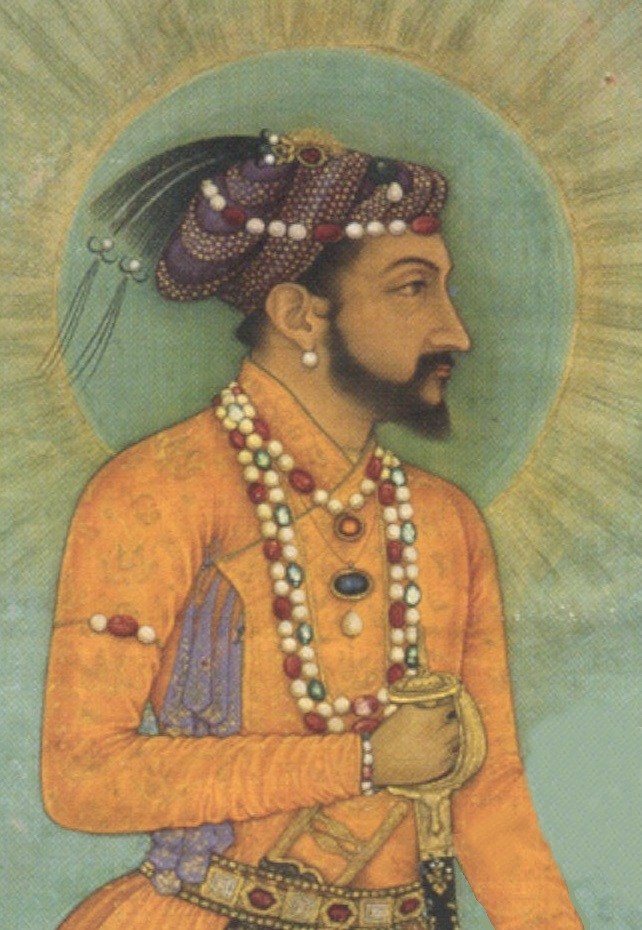
One of the most recognisable buildings on earth is a tomb. Twenty thousand workers laboured for twenty-two years hauling white marble from quarries at Makrana, two hundred miles away in Rajasthan, inlaying it with lapis lazuli from Afghanistan, carnelian from Gujarat, jade from China. When the building was finished, the man who ordered it was a prisoner. Shah Jahan spent the last eight years of his life in the Muthamman Burj - a tower in Agra Fort - with a direct view across the Yamuna to the dome he had built over his wife’s body. He died there on 22 January 1666, and his son quietly interred him in the same monument, next to Mumtaz Mahal, where he had always intended to be.
That is one version of his life. There is another, which involves considerably more blood.
The Mughals came to India in 1526, when Babur - a Timurid prince from Fergana, in what is now Uzbekistan, who claimed descent from both Timur and Genghis Khan - crossed the Khyber Pass and destroyed the Delhi Sultanate at Panipat. They were not the first conquerors of the subcontinent, and they would not be the last. But in the two centuries they ruled before the British arrived, they transformed India more thoroughly than anyone before them, and their mark on that land is still legible today. The administrative language they imposed on northern India became Urdu. The buildings they constructed are now the country’s most iconic monuments. The Muslim population of India - roughly 200 million people today - reflects processes set in motion under Mughal rule. The contest over who gets to claim India’s pre-British history, which runs through Indian politics with particular ferocity, is largely a contest over the Mughal legacy. The Mughals did not invent Islam in India - the Sultanate rulers had been there for three centuries before Babur arrived - but they consolidated its dominance, spread it through patronage, legislation and conversion, and built the state structures that made it permanent.
Shah Jahan was the fifth Mughal emperor, born in Lahore on 5 January 1592. His grandfather, Akbar, was so fond of him that he had the boy raised in his own household, telling Jahangir - the boy’s actual father - that Khurram, as he was then named, was “my true son.” Khurram grew up in the late Mughal court: multilingual, artistically sophisticated, trained in martial arts and administration. The title his father eventually gave him after a successful campaign in the Deccan was Shah Jahan - “King of the World” in Persian. He took it seriously.
Getting to the throne required the kind of work that title implies. The Mughal succession was not determined by primogeniture but by intrigue and combat, and Khurram spent a decade navigating a court dominated by his stepmother Nur Jahan, who was manoeuvring to place her own son-in-law on the throne in his stead. When Jahangir died in 1627, Shah Jahan moved fast. His father-in-law Asaf Khan - also Nur Jahan’s brother, who had spent years playing both sides - confined Nur Jahan and secured the succession. On 23 January 1628, one day after the coronation, the new emperor’s orders were carried out: his brother Shahryar executed, along with two nephews and two cousins, erasing every plausible rival from the succession. Nur Jahan spent the rest of her long life under house arrest. Shah Jahan could now govern.
His reign lasted thirty years, and by most economic measures they were extraordinary. Angus Maddison’s estimates of historical GDP put Mughal India’s share of global output at almost 25% in 1700 - the largest of any country on earth, surpassing China - itself in the process of rapid growth and increasing prosperity. In 1648, Shah Jahan’s army consisted of over 900,000 infantry and artillery men, plus 185,000 cavalry. He drove the Portuguese from their fortified trading post at Hooghly in Bengal, fought a long war with Safavid Persia over Kandahar, and conducted campaigns in the Deccan that brought the remaining sultanates to heel. His administration was centralised, systematised, and extractive enough to fund an empire stretching from Kabul to the Bay of Bengal.
He also demolished temples. Seventy-six in Benares alone, according to the Badshahnama, his court chronicle. His grandfather Akbar had been conspicuously tolerant - he had married Hindu Rajput wives, abolished the jizya tax on non-Muslims, and presided over theological debates in which no faith held automatic precedence. Shah Jahan’s reign moved in a different direction. The Naqshbandi Sufi movement, which pushed for stricter Islamic observance, gained influence at court. Buddhism, already marginalised in India for centuries by earlier Sultanate conquests that had destroyed Nalanda and the great monastic universities of Bihar, had its last remaining institutions erased under Mughal rule. The syncretic culture Akbar had cultivated persisted in architecture and painting - but the political balance shifted, and Shah Jahan’s son Aurangzeb would push it further still.
The personal story runs in counterpoint to all of this. He had married Mumtaz Mahal in 1612, a woman he had been engaged to since they were fifteen. She was not merely a consort: she held the imperial seal, attended the council, issued orders in her own right, and accompanied him on campaign. Shah Jahan, who had other wives, was conspicuously devoted to her. She died in June 1631 in Burhanpur, giving birth to their fourteenth child after thirty hours of labour. Their daughter Jahanara, seventeen years old, was so distressed she reportedly began distributing her jewels to the poor hoping for divine intervention. Shah Jahan was, in the words of the court chronicle, “paralysed by grief.” He turned grey within weeks. He closed court for two years. And then he commissioned the building.
The Taj Mahal took twenty-two years and those twenty thousand workers. The same man who could execute a brother the morning after his coronation spent his middle years overseeing the geometry of the gardens, the calligraphy of the inscriptions, the precise tilt of the minarets - angled slightly outward so that in the event of collapse they would fall away from the central dome. He moved his capital to Delhi and built the Red Fort there, then the Jama Masjid. The Shalimar Gardens in Lahore. The Wazir Khan Mosque. He owned the Kohinoor diamond, which he set into the Peacock Throne - a structure inlaid with so many gems it reportedly cost more to build than the entire Taj Mahal.
In September 1657 he fell seriously ill. His eldest son Dara Shikoh assumed the regency. His other sons - Shuja, Murad, Aurangzeb - each concluded the throne was now in play and moved toward it. Aurangzeb was the most capable military commander and the most coldly patient politician. He defeated Dara’s forces at the Battle of Samugarh in May 1658, had Dara eventually executed, and locked Shah Jahan in a room. He was not mistreated, but neither was he allowed to hold any power. His daughter Jahanara voluntarily shared his confinement and nursed him until his death. He could see the Taj from his tower window, and by most accounts he rarely looked away from it.
The empire he left Aurangzeb was the wealthiest on earth. Aurangzeb ruled for forty-nine more years and by the time he died in 1707 he had destroyed the conditions that had made that wealth possible: endless Deccan wars, reimposition of the jizya, the alienation of the Rajput and Maratha allies who had provided the empire’s military backbone. The Mughals limped on until 1857, when the last emperor, Bahadur Shah Zafar, was exiled to Rangoon by the British after the Indian uprising. He died there, writing poetry.
Shah Jahan’s name translates as “King of the World.” The title was given to him in 1617 by a father who thought him exceptional, and he spent his reign trying to deserve it. He came as close as anyone in his century: the largest army, the largest economy, the most ambitious construction programme, a building that still draws seven million visitors a year. His inheritance to the subcontinent is an awkward one - the Taj Mahal and the demolished temples, Urdu and the religious churn, the administrative skeleton on which the British would eventually build their own empire. India argues about the Mughals constantly and will continue to. The tomb at Agra just sits there, indifferent to the argument, drawing its crowds across four centuries.