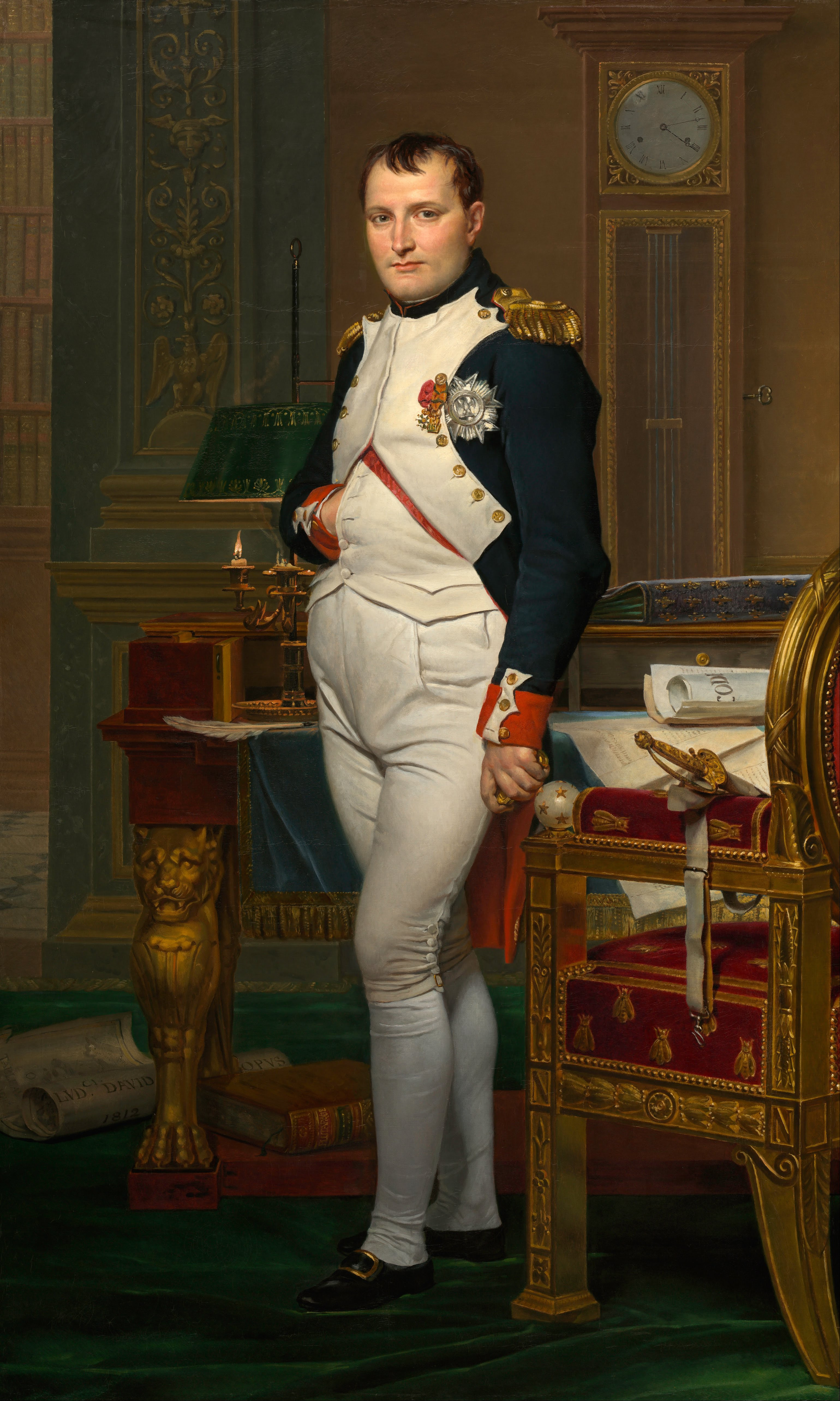
On 26 February 1815, Napoleon Bonaparte slipped out of Portoferraio on Elba with roughly a thousand men and a plan that should not have worked. He had abdicated less than a year earlier, Europe was carving up the map at the Congress of Vienna, and the Bourbon monarchy in Paris looked restored. Yet by 1 March he had landed at Golfe-Juan, and by 20 March he was back in Paris. No decisive battle got him there. Men sent to arrest him kept joining him.
That march north is still one of the great demonstrations of political theatre in modern history. Napoleon avoided heavily royalist territory, cut through the Alps, and converted encounters into spectacles of legitimacy. The most famous moment came near Grenoble, where he faced troops sent by Louis XVIII and dared them to shoot. They did not. The army that was supposed to stop him became the army that carried him home.
I think this is the part people miss when they reduce the episode to pure bravado. The return succeeded because Bourbon rule had already squandered goodwill. Veterans were sidelined, émigré nobles returned with old habits, and the regime felt like an imported settlement rather than a durable one. Napoleon did not re-enter a stable country and smash it. He walked into a vacuum and filled it before anyone else could.
The problem was that a dramatic comeback is not a strategy. The powers at Vienna declared him an outlaw before he reached Paris, and the Seventh Coalition moved to destroy him. Napoleon had little time, fewer resources than his enemies, and no margin for error. In June he moved first into Belgium, won at Ligny, failed to break Wellington at Quatre Bras, and on 18 June 1815 lost at Waterloo when the Prussian and Anglo-allied armies converged.
After that, the end came fast and without romance. He abdicated again on 22 June, surrendered to the British in July, and was shipped to Saint Helena in the South Atlantic, far enough away to prevent another resurrection. He died there in 1821. If Elba was exile with a horizon, Saint Helena was exile as a full stop.
I read 26 February as the beginning of Napoleon’s last and most revealing act. The escape proved that charisma can still overturn a settlement that looks settled. Waterloo proved that charisma cannot defeat arithmetic forever.