On 10 February 1763, representatives of Britain, France, and Spain signed the Treaty of Paris in the French capital, ending the Seven Years’ War — the first conflict in history fought on every inhabited continent simultaneously. The terms were straightforward in the way that terms dictated by winners tend to be. France ceded Canada, Cape Breton, and all its territory east of the Mississippi to Britain. Spain, which had entered the war late and on the wrong side, handed over Florida. France, in a separate arrangement already concluded at Fontainebleau the previous November, gave Louisiana west of the Mississippi to Spain as compensation for dragging Madrid into a losing war. In India, France got its trading posts back but agreed to keep them unfortified and to recognise British clients as rulers of the subcontinent’s key states. Britain returned Guadeloupe and Martinique to France — the sugar islands were the one prize Paris truly wanted — and gave back Manila and Havana to Spain. The paperwork took a morning. The consequences shaped the next three centuries.
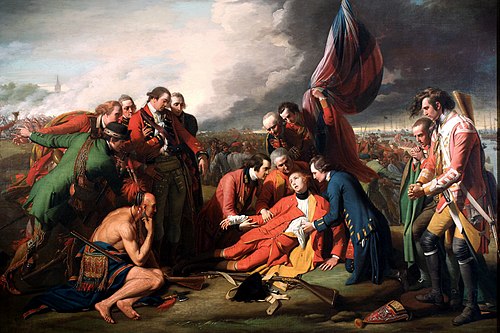
The war that produced this settlement had begun in 1756 as a conventional European quarrel between Austria and Prussia over Silesia, but it was never really about Silesia. France and Britain had been fighting an undeclared colonial war in the Ohio Valley since 1754, where a twenty-two-year-old Virginia militia colonel named George Washington had started the shooting by ambushing a French patrol at Jumonville Glen — a skirmish that, in Horace Walpole’s phrase, “set the world on fire.” The alliance system pulled in the rest: Austria, Russia, Sweden, and Saxony against Prussia and Britain; Spain joining France in 1762 when the war was already lost. Fighting spread from the forests of Pennsylvania to the sugar plantations of the Caribbean, from the trading posts of Senegal to the princely courts of Bengal, from the Baltic coast to the Philippines. At Plassey in 1757, Robert Clive defeated the Nawab of Bengal with three thousand men and secured the revenues of the richest province in India. At Quebec in 1759, James Wolfe scaled the cliffs at night and destroyed French power in North America on the Plains of Abraham, dying in the process and becoming the subject of Benjamin West’s famous painting — a work that did more for British patriotic mythology than the battle itself. At sea, the Royal Navy crushed the French fleet at Lagos and Quiberon Bay in the same year, eliminating any serious threat of invasion and sealing France’s inability to resupply its colonies. Prussia, fighting alone against three major powers on the European continent, survived largely through Frederick the Great’s tactical brilliance and Russia’s sudden withdrawal after Empress Elizabeth died in January 1762 and was replaced by Peter III, who admired Frederick to the point of idolatry. The Treaty of Hubertusburg, signed five days after the Treaty of Paris, settled the European theatre: Prussia kept Silesia, Austria got nothing, and the map returned to where it had started. The colonial map did not.
The scale of France’s loss is hard to overstate. Before 1763, New France stretched from the Gulf of St Lawrence to the Great Lakes and down the Mississippi to the Gulf of Mexico — a territory that, on paper, dwarfed the British colonies clinging to the Atlantic seaboard. It was thinly populated, about sixty-five thousand French settlers against over a million British colonists, but it was vast, strategically positioned, and defended by a chain of forts and alliances with indigenous nations that had kept British expansion in check for decades. After 1763, all of it was gone except two flyspecks off the coast of Newfoundland — Saint Pierre and Miquelon — where fishermen could dry their cod. Voltaire had dismissed Canada as “quelques arpents de neige,” a few acres of snow, and the quip captured a genuine strand of French strategic thinking. The Duc de Choiseul, who negotiated the treaty for France, calculated that Guadeloupe’s sugar revenues were worth more than the entire fur trade of Canada. He was right, in the short term. Guadeloupe produced six million livres a year. Canada cost the Crown money. But Choiseul was also playing a longer game. He believed — correctly, as it turned out — that without France on their northern border, the British colonists would have no reason to stay loyal to London. “England will ere long repent of having removed the only check that could keep her colonies in awe,” he reportedly told colleagues. The prediction took twelve years to come true.
Britain’s gains from the treaty were enormous and, within a generation, self-defeating. The acquisition of Canada and the eastern Mississippi valley doubled the size of British North America overnight. Florida gave Britain control of the entire eastern seaboard from Hudson Bay to the Keys. In India, the treaty confirmed what Clive’s victories had already established: the East India Company was the dominant power on the subcontinent, and the road from trading post to territorial empire was open. In West Africa, Britain kept Senegal and its gum and slave trades. By any measure, the Britain of February 1763 was the most powerful colonial state the world had ever seen — its navy unchallenged, its territories spanning four continents, its commerce fuelled by the labour of enslaved people on Caribbean plantations and the revenues of Bengal. William Pitt the Elder, who had orchestrated much of the war effort before being pushed out of office, nonetheless opposed the treaty. He thought Bute had given too much back. He wanted France kept permanently crippled. The Parliament voted 319 to 65 to ratify. The majority figured they had won enough.
They had won too much. The war had cost Britain roughly 130 million pounds — a staggering sum for a country whose annual revenue was under ten million. The national debt had nearly doubled. Someone had to pay for the army now garrisoning a continent’s worth of new territory, and George III’s ministers looked at the colonists who had benefited most from the removal of the French threat and decided they should contribute. The Stamp Act of 1765, the Townshend Acts of 1767, the Tea Act of 1773 — each was a direct consequence of the fiscal crisis created by the Seven Years’ War. The colonists, who had grown accustomed to governing themselves while London was busy fighting, did not take it well. France, still smarting from the loss of 1763, saw an opportunity and took it. When the American Revolution broke out in 1775, Louis XVI’s government supplied money, weapons, and eventually an army and a fleet. At Yorktown in 1781, French troops and French ships were as essential to the British surrender as the Continental Army. The Treaty of Paris of 1783 — same city, same name, same room — ended British rule over the thirteen colonies. France got its revenge but not its empire back. What it got instead was a fiscal crisis of its own, worsened by the cost of supporting the American war, which helped push it towards 1789.
I keep coming back to Choiseul’s calculation. He sat in Paris in 1763, having lost a war on every front, and made the cold decision that a sugar island mattered more than a continent. By the accountancy of the day, he was right. By the accountancy of history, he had just handed Britain the raw material for the largest empire the world would see — and, in the same gesture, lit the fuse that would blow it apart. The Seven Years’ War settled which European language would dominate North America, which trading company would rule India, and which navy would control the world’s oceans for the next century and a half. We still live inside the map it drew. Canada speaks English. India’s legal system runs on common law. The United States exists because Britain won too decisively and taxed too clumsily. Every one of those outcomes traces back, by one route or another, to a treaty signed in Paris on a February morning 263 years ago.