The treaty that ended the Second Opium War in 1860 required China to legalise the opium trade. The Qing had banned the drug in 1729, tried to destroy it by force in 1839, fought a war over it, and lost that war. Now they were contractually obligated to permit what they had spent 131 years suppressing. This was not, in itself, the extraordinary part. The extraordinary part is that twenty-two years before the treaty, a senior official had put exactly this proposal before the emperor — legalise it, tax it heavily, regulate the supply — and the emperor had said no.
That official was Xu Naiji, Vice President of the Sacrificial Court, and his June 1836 memorial to the Daoguang Emperor is one of the more consequential documents to lose its argument in Chinese history. The emperor sided instead with the prohibitionists. Within three years China was at war with Britain. Within six, it had ceded Hong Kong and opened five treaty ports to foreign commerce on terms it did not set. Within twenty-four, it had the legalised opium trade Xu Naiji had proposed — minus the taxes, minus the regulation, minus any of the sovereignty that might have made the arrangement bearable.
The opium crisis that prompted this debate had been building for over a century. The Qing had banned the drug’s import in 1729, when roughly 200 chests arrived annually from British India. The ban was not enforced. By 1800 the figure was 4,500 chests per year. By the early 1820s it was 10,000. By 1838, the year Daoguang finally acted, it was 40,000 chests — somewhere between 2,500 and 5,600 tonnes, paid for almost entirely in silver.
The silver drain was what turned a social problem into an imperial emergency. China had run a trade surplus for centuries, exporting tea, silk, and porcelain in exchange for foreign silver that flowed into the empire and stayed there. Opium reversed this arrangement with efficiency. In the early 1820s, the silver flowing out to pay for the drug amounted to roughly 2 million taels per year. By the early 1830s it was over 9 million. Over the entire decade, the net outflow reached approximately 34 million Mexican silver dollars. Commissioner Lin Zexu estimated that Chinese opium consumers spent around 100 million taels annually — more than double the entire imperial budget. Tax revenues collected in silver but spent from copper-based accounts became crushing. Addiction had spread from Canton merchants into the bureaucracy and the military. A soldier who cannot function is expensive before he is useless.
Xu Naiji read this situation without sentiment. Bans had been in place for over a century and had failed for over a century. The longer they remained nominally in force, the larger the underground economy grew, and the more useful the drug trade became to every corrupt official between Canton and Beijing — Cohong merchants taking bribes, local magistrates looking the other way, entire supply chains operating in broad daylight behind a paper prohibition. His proposal: legalise domestic poppy cultivation alongside foreign imports, tax both heavily to make opium expensive and discourage casual use, and shift payments away from silver toward barter and goods. Bring the revenue into the imperial treasury instead of into the pockets of smugglers. “The more severe the interdicts against it are made,” he wrote, “the more widely do the evils arising therefrom spread.” He was not endorsing addiction. He was arguing that the status quo — banned in law, flourishing in practice — was the worst possible configuration.
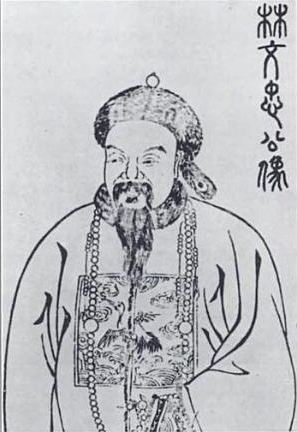
The prohibition case was made most forcefully by Lin Zexu, by 1836 the Governor-General of Hunan and Hubei, a man celebrated across the empire for incorruptibility and administrative drive. His argument was moral and strategic in equal measure. Opium was a poison: physically, militarily, socially. Legalisation would signal weakness to foreign powers and extend consumption to classes currently deterred by illegality. The silver drain could only be addressed by suppression, not accommodation. His warning carried the weight of urgency: “If we continue to allow this trade to flourish, in a few dozen years we will find ourselves not only with no soldiers to resist the enemy, but also with no money to equip the army.”
The irony in that sentence is visible to everyone except the man who wrote it. He was describing the outcome that his own policy would deliver. In late 1838, Daoguang appointed Lin as Imperial Commissioner with full authority to end the trade. Lin arrived in Canton in early 1839 with the emperor’s mandate and a certainty that the problem was solvable by determination. He demanded foreign merchants surrender their opium stocks. They surrendered 1,420 tonnes. Lin had it destroyed at Humen Beach — mixed with salt and lime and flushed into the sea over twenty-three days. He wrote to Queen Victoria requesting that Britain cease poppy production in Bengal and Madras. Victoria did not reply. Britain’s response was more direct.
HMS Volage, HMS Hyacinth, and eventually a full naval expedition sailed up Chinese rivers and did as they pleased. The Qing military — built for land campaigns against steppe cavalry, its doctrine and equipment largely unchanged since the previous century — had no answer for steam-powered warships lobbing explosive shells. (The broader story of how the Qing’s strategic success in the north left them blind to the threat from the sea is one I trace in The Qing’s Rise.) The First Opium War lasted three years. The Treaty of Nanking in 1842 ceded Hong Kong to Britain, opened five treaty ports, and imposed indemnities of 21 million silver dollars — partly to reimburse the merchants whose opium Lin had destroyed. The Second Opium War produced the Convention of Peking in 1860, under which China was obligated to legalise the trade that Lin had gone to war to eliminate.
The timeline, set out plainly: banned by edict in 1729; debated for legalisation in 1836 and rejected; suppressed by force in 1839; legal by British treaty in 1860. The reformers lost the court argument and were then vindicated by the consequences — too late, and on terms that contained none of what had made their proposal sensible. Xu Naiji’s scheme at least retained Chinese sovereignty over pricing, revenue, and supply. The British version retained none of that for China.
The lesson is not simply that prohibition failed — it did, comprehensively, but this is not a parable about the War on Drugs. The more precise point is what happens when a policy fails in practice but survives as a moral position. By 1836 the Qing court had over a hundred years of data on the ban’s performance. The data was in the silver outflow figures, the addiction rates among officials, the open bribery in Canton. Xu Naiji was not proposing something untried; he was arguing against something tried and failed for a century. But the morally legible response — prohibition, enforcement, punishment — was politically easier than admitting that the bad thing had already arrived and the question was now how to manage it. Daoguang chose the legible response. It produced a war. The war produced a humiliation that ran until 1949.
Lin Zexu understood something of this by the end. Stripped of his post after the military defeats of 1840 and exiled to Xinjiang by the same emperor who had sent him to Canton, he spent his final decade watching the consequences he had warned against unfold regardless. The soldiers existed, barely. The money to equip them did not. The man who won the argument and lost the war was at least consistent: he had always said that without suppression, China would have neither. What he had not foreseen was that suppression, too, would leave it with neither. He died in 1850, ten years before the treaty that required the empire to permit what he had fought to end.