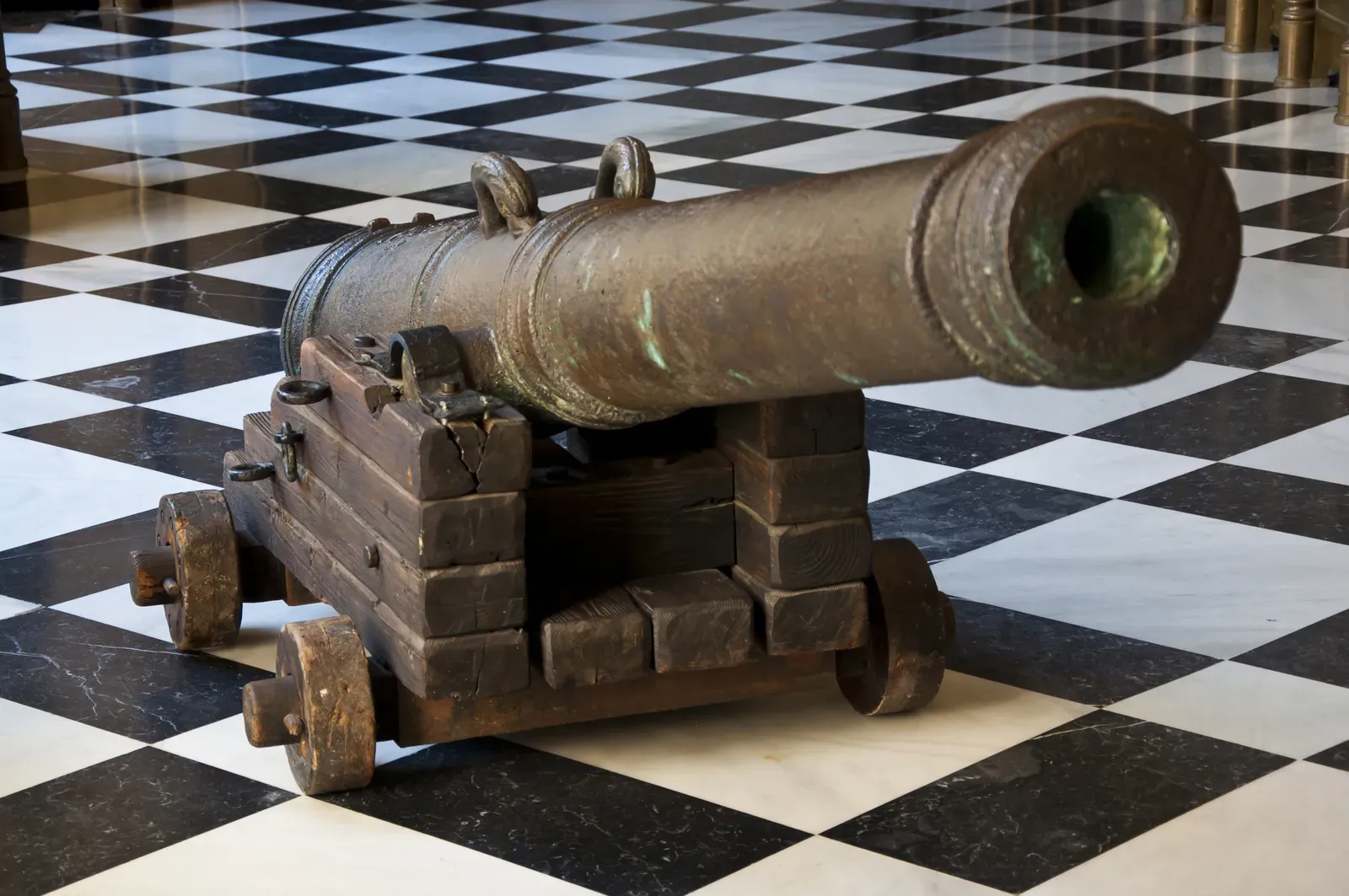
In the pitch black of the early hours of 6 September 1622, a hurricane drove the Spanish galleon Nuestra Señora de Atocha onto the coral shallows of the Florida Keys. She was a 550-ton warship carrying twenty bronze cannon and twenty-four tonnes of silver, but in the teeth of a Category 3 gale, none of that mattered. A wave lifted the vessel like kindling and dropped her hull directly onto a reef, tearing the keel away. The galleon slipped backwards into fifty-five feet of churning water and vanished beneath the surface in minutes.
Of the 265 people aboard - noblemen returning to Castile, soldiers, friars, sailors, and enslaved Africans chained in the lower decks - only five survived. Three seamen and two slaves climbed the rigging of the mizzenmast, which was the only splinter of the ship that remained above the water when the sun rose, and clung there until rescuers from Havana plucked them off. Two hundred and sixty souls, along with the accumulated wealth of an entire viceroyalty, had settled into the sand.
We have spent four centuries romanticising the Spanish treasure fleet. Hollywood and maritime novelists turned the Flota into a colourful backdrop for buccaneers, eye patches, and Errol Flynn swinging from the rigging. But the reality was closer to an armed convoy of armoured bank trucks crawling along a predictable highway, moving the spoils of a brutal industrial extraction machine across the Atlantic.
The silver resting in the Atocha’s belly had not been found lying about in treasure chests. It had been clawed out of the freezing, oxygen-starved heights of Potosí in the high Andes, four thousand metres above sea level. There, in the red mountain that the Quechua called Cerro Rico, thousands of conscripted indigenous labourers died under the mita system - poisoned by mercury fumes in the refining vats, crushed in cave-ins, or starved in dark shafts. The resulting metal was cast into 1,038 heavy ingots, each stamped with the royal seal certifying that the king’s fifth, the quinto real, had been paid. Another 180,000 silver coins were packed into iron-bound chests, alongside gold discs from Colombia and crates of raw emeralds from the Muzo mines. It was a monument of human suffering disguised as currency.
The ship was also packed with lies. Beyond the registered royal manifest, the Atocha was stuffed with contraband. Noble passengers, merchants, and officials had bribed harbour inspectors in Cartagena and Portobelo to look the other way while they crammed unregistered bars, jewellery, and silver plate into every available crate and cabin to dodge royal taxation. The loading took so long that the fleet fell fatally behind schedule.
By the time the twenty-eight ships under General Lope Díez de Armendáriz assembled in Havana, it was already late August. Any pilot with a grain of sense knew that sailing the narrow, reef-strewn Straits of Florida in September was a terrifying gamble. The hurricane season was at its peak. But in Madrid, the nineteen-year-old King Philip IV and his chief minister, the Count-Duke of Olivares, were desperate for money. The Twelve Years’ Truce with the Dutch Republic had lapsed the year before, the Thirty Years’ War was devouring armies in Germany, and Genoese bankers were refusing to extend royal credit without hard collateral. The fleet could not wait for spring. Royal orders dictated that the treasure sail immediately, weather be damned.
The gamble failed inside forty-eight hours. Driven north into the Florida Straits, the convoy was scattered. Eight vessels were lost, but the Atocha and her sister ship, the Santa Margarita, suffered the worst catastrophe. When news of the disaster reached Seville and Madrid, it triggered an immediate credit freeze. The Crown was forced to suspend debt payments, and several prominent trading houses collapsed.
I have always thought that the fate of the Atocha exposes the central illusion of the Spanish imperial project. Spain believed that gold and silver constituted wealth. In reality, bullion was merely a narcotic that allowed the monarchy to postpone building a modern, productive domestic economy. While the Dutch were building merchant fleets, manufacturing textiles, and pioneering joint-stock capitalism with enterprises like the Dutch East India Company, Spain merely extracted metal from South America and passed it straight to foreign financiers to pay for futile religious wars. The silver flowed through Castile like water through a pipe, leaving behind high inflation, a ruined peasantry, and repeated bankruptcies. When forty tonnes of that silver went to the seabed in 1622, the pipe broke, and the whole fragile edifice shuddered.
Spain did not give up easily. The authorities in Havana sent salvage expeditions led by a determined bureaucrat named Francisco Núñez Melián, who used a bronze diving bell and enslaved pearl divers to sweep the floor of the Florida Straits. Melián managed to find the Santa Margarita and salvaged a substantial portion of her cargo. But before he could recover the Atocha, a second hurricane swept through the Keys in October 1622, tearing the galleon’s remaining upper works to pieces and scattering the hull across miles of seabed. Shifting sand dunes buried the debris. For the next 360 years, the Atocha was silence and rumour.
It took modern American obsession to wake her up. In 1969, an eccentric former chicken farmer from Indiana named Mel Fisher decided he was going to find the lost galleon. He moved his family and a motley crew of divers to Key West, founded a shoestring outfit called Treasure Salvors, and spent sixteen and a half years sweeping magnetometers across the seafloor. Every single morning, Fisher would gather his weary, sunburnt crew and announce: “Today’s the day!”
For years, they found nothing but modern trash, anchor chains, and false hopes. They were searching forty miles in the wrong direction, off Upper Matecumbe Key, misled by errors in nineteenth-century translations of Spanish records. It was only when a historian, Dr Eugene Lyon, spent months deciphering seventeenth-century scribal handwriting in the Archives of the Indies in Seville that the truth emerged: the Spanish term Cayos del Marqués referred to the islands west of Key West, not the Matecumbe group.
Fisher shifted his boats to the Marquesas, but the sea demanded another blood price. In July 1975, just days after locating nine of the galleon’s bronze cannon, Fisher’s oldest son Dirk, his daughter-in-law Angel, and a diver named Rick Sleyster drowned when their salvage vessel, the Northwind, capsized at anchor during the night due to a faulty bilge pump. Most men would have packed up and gone home. Fisher returned to the water.
The payoff finally came on 20 July 1985. Kane Fisher, Mel’s surviving son, was operating the salvage boat Dauntless when the magnetometer screamed. Divers dropped into the shallow water and found themselves looking at a solid reef of silver bars, stacked four feet high like cordwood, encrusted with coral and sea life. “Put away the charts,” Kane radioed to the shore base. “We found the main pile!”
The find was staggering: over a thousand silver ingots, roughly 150,000 silver coins, dozens of gold bars, and a chest of brilliant green Colombian emeralds, valued at roughly $450 million. Yet the moment the treasure broke the surface, the ghosts of the seventeenth century were replaced by the lawyers of the twentieth. The State of Florida claimed twenty-five per cent of the loot; the United States federal government attempted to seize the rest under the Antiquities Act. Fisher spent millions fighting both in court, dragging the case all the way to the United States Supreme Court in Florida v. Treasure Salvors, Inc., which ruled in 1982 that since the wreck lay in international waters beyond state jurisdiction, the treasure belonged to the finders.
There is a grim poetry in the entire saga. An empire built on conquest, stretching back to the bloody audacity of conquistadors like Francisco Pizarro, sent hundreds of men and forty tonnes of bullion to the bottom of the Florida Straits because its court could not wait out a storm. Three and a half centuries later, three more people died to pull that silver back into the light, only for the bullion to end up divided between private investors, museum display cases, and, last but not least, attorney fees. The silver survived the miners who dug it, the king who claimed it, the sailors who drowned with it, and the empire that spent it before it even arrived. Some of it sits in Key West today behind reinforced glass, cool and indifferent, tonnes of proof that men will die for metal that cannot love them back.