There is a persistent fantasy that wealth can buy history. In the autumn of 1571, that fantasy belonged to King Philip II of Spain and Pope Pius V. The Spanish empire was swimming in bullion; silver from the heights of Potosí and gold from the Caribbean poured into Seville in quantities the ancient world never saw. Across the Channel sat Protestant England: a cash-strapped island realm ruled by a thirty-eight-year-old woman without an heir, surrounded by Catholic enemies, and held together by little more than William Cecil’s parsimony and an aging fleet. To Madrid and Rome, Elizabeth I looked like a temporary administrative error. A few thousand Spanish veterans, a northern rebellion, and a papal blessing would return England to the Roman fold. At times, it looked almost inevitable.
The Ridolfi plot was neither the first nor the last scheme to replace the Protestant queen with a more pliable, Catholic alternative. Ever since Henry VIII’s break with Rome, the Vatican had operated under the delusion that the English people were pining for foreign liberation. When Pope Pius V issued Regnans in Excelsis in 1570, excommunicating Elizabeth and releasing her subjects from their oaths of obedience, he did not merely express theological anger. He pinned a bounty to the queen’s chest. Enter Roberto Ridolfi, an Italian banker in London who combined deep financial networks and fervent zeal with the conspiratorial discretion of a church bell.
Ridolfi’s blueprint was intoxicatingly simple on paper. Fernando Álvarez de Toledo, the Duke of Alba, would sail from the Netherlands with ten thousand battle-hardened Spanish troops. They would land at Portsmouth or Harwich - though Ridolfi was notably hazy about where Harwich sat on a map - while northern English Catholics rose in revolt. Ridolfi breezily assured Rome that half the English peerage was Catholic and could muster forty thousand men overnight. Elizabeth would be seized or murdered, Mary, Queen of Scots placed on the throne, and Mary married to Thomas Howard, 4th Duke of Norfolk.
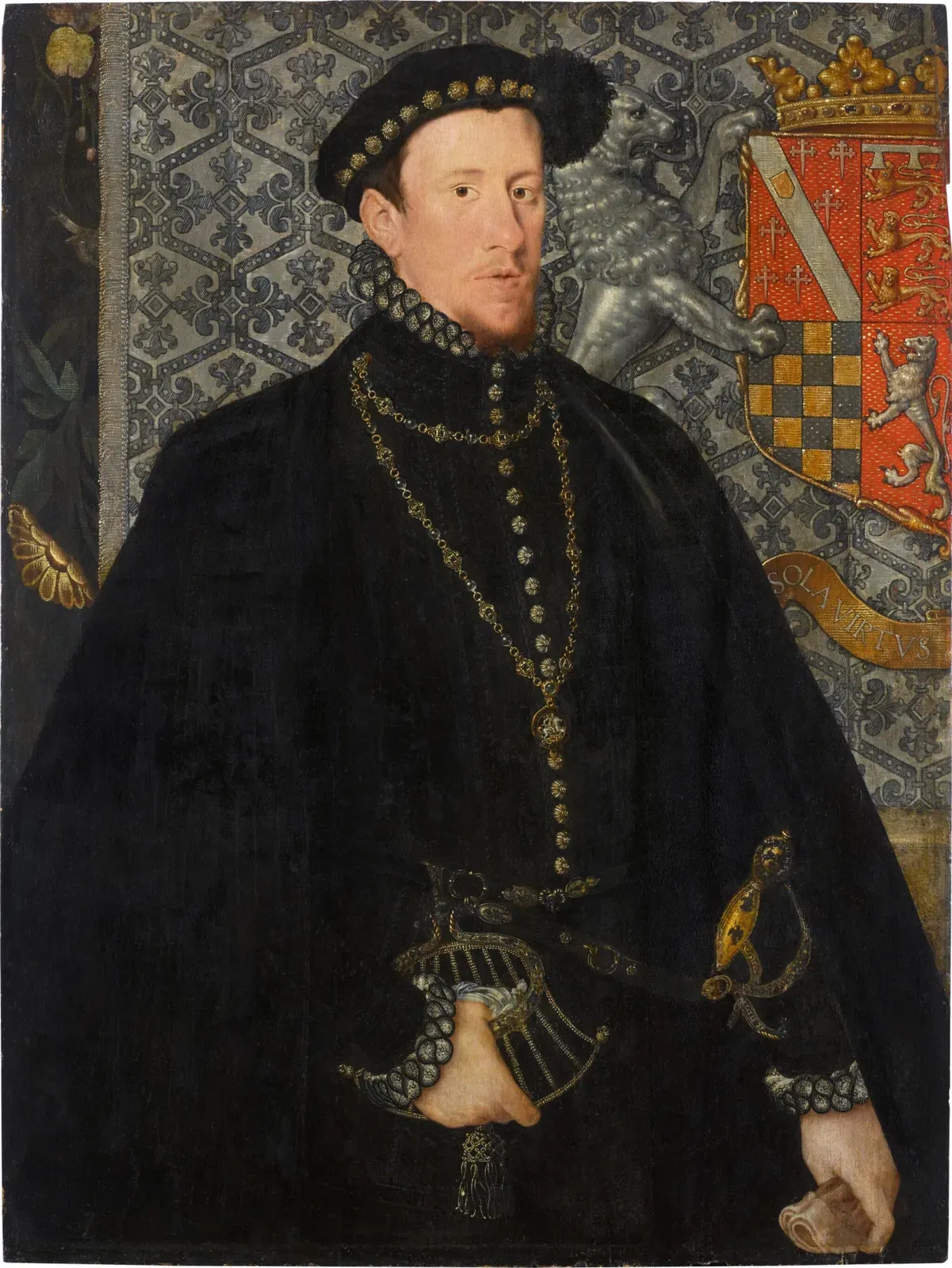
Norfolk was the linchpin, and a more pathetic conspirator could scarcely have been found in the peerage. In 1571, Thomas Howard was the only duke in England, Elizabeth’s second cousin, and the premier nobleman of the realm. He was wealthy, obsessed with dynastic status, and catastrophically weak. Norfolk was not even a Catholic; he was a conforming Protestant who privately professed Roman devotion whenever a crown seemed within reach. He had already landed in the Tower two years earlier for attempting to marry Mary Stuart, securing his release only by signing a grovelling pledge never to contact her again. Yet barely twelve months later, he was plotting a Spanish invasion to butcher his sovereign and claim her throne.
I have always found the amateurism of high-born conspirators more instructive than their malice. Sixteenth-century aristocrats seemed incapable of understanding that conspiracy requires silence. Ridolfi spent the spring of 1571 touring Europe like an itinerant salesman, pitching invasion from Brussels to Rome and Madrid. He met King Philip, took papal blessings, and boasted about his enterprise to anyone who poured him wine. He even outlined the plot to Cosimo I de’ Medici, Grand Duke of Tuscany, who found the talkative banker so alarming that he immediately sent a courier to warn Elizabeth.
Meanwhile, in London, William Cecil was running the sharpest counter-intelligence operation in Europe. While Spanish gold was supposed to buy the kingdom, Cecil relied on intercepted post, prison informants, and the rack. In April 1571, port officials at Dover caught Ridolfi’s courier, Charles Baillie, carrying encrypted packets. Thrown into the Marshalsea, Baillie was befriended by a government mole named William Herle, who extracted his confidence before interrogators stretched the courier on the rack. Cecil knew the shape of the plot months before its architects made their move.
Yet the decisive blow came not from master spies, but from a suspicious cloth merchant. On 29 August 1571, Norfolk’s secretaries handed a leather bag to Thomas Browne, a Shrewsbury draper, for delivery to an estate manager in the north. The bag supposedly contained silver coin. Browne hefted the sack, noticed it was far too heavy for silver, and opened it. He found six hundred pounds in French gold destined for Mary Stuart’s partisans, wrapped in coded letters. Knowing Norfolk was under suspicion, the draper took the bag straight to the Privy Council.
Cecil moved with cold speed. Norfolk’s secretaries were arrested and interrogated under threat of torture. Under pressure, Higford admitted that contrary to the duke’s orders, the incriminating papers had never been burned. When Cecil’s agents searched Norfolk’s London residence at Howard House, they found Mary Stuart’s letters in full cipher, alongside the alphabet key to decode them, tucked neatly beneath a doormat in the gallery.
On 7 September 1571, the queen’s warrant arrived at Howard House, and Thomas Howard was escorted to the Tower. Norfolk attempted to bluff, claiming the money was for private rents. But when Cecil laid the deciphered papers before him - detailing invasion ports, assassination schemes, and papal bribes - the duke broke. His servants had confessed, Mary’s letters were in state hands, and his own handwriting stared back at him. Convicted of high treason in January, Norfolk went to the block on Tower Hill on 2 June 1572.
There is an enduring lesson in the collapse of the Ridolfi plot. Philip II commanded the richest empire on earth, fed by the endless silver of Potosí - bullion that would later sink aboard galleons like the Nuestra Señora de Atocha while trying to finance Habsburg hegemony. Madrid believed cash and divine mandate could purchase a kingdom. Seventeen years later, Philip repeated the mistake with the Spanish Armada, sending thirty thousand men across the Channel under the delusion that divine favour would override bad logistics. Both ventures failed for the same reason: the English Reformation was not an elite conspiracy waiting to be toppled by sacks of gold and Spanish pikemen. It had become a resilient national state.
Norfolk’s death on the scaffold ended an entire tier of the English nobility. He was the last duke in Tudor England; Elizabeth never created another. For Mary, Queen of Scots, the disaster marked the start of the long confinement that ended at Fotheringhay Castle. And Roberto Ridolfi? The garrulous banker never returned to England. He died comfortably in 1612 as a respected senator in Florence, dining out on memories of the invasion that never sailed. An ancient dukedom was extinguished, a queen was trapped, and Madrid’s gold was squandered, all because a handful of plotters believed an empire could turn back the clock - if only they remembered to check under the doormat.