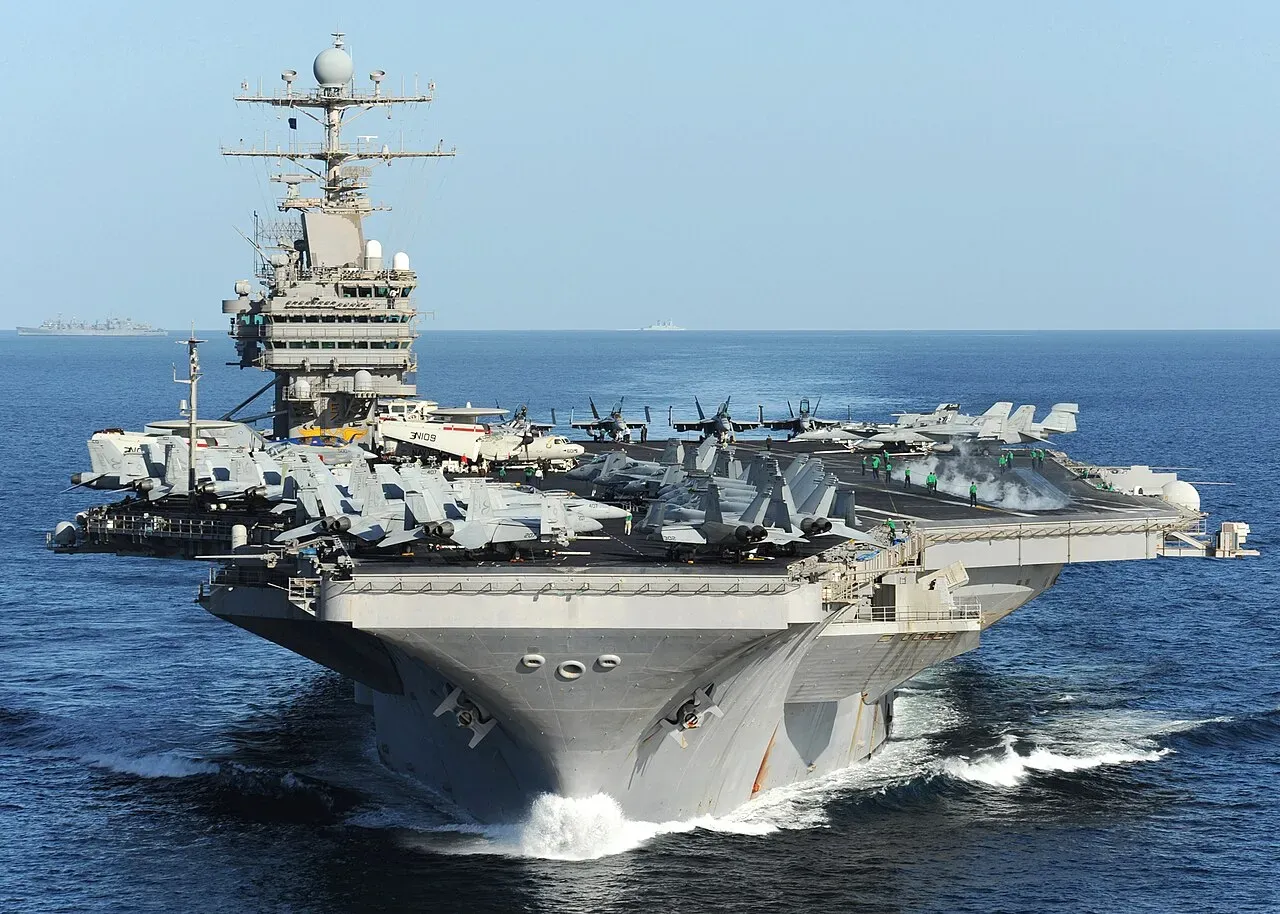
At roughly 10:30 p.m. local time on 28 February 2026, explosions began across Iran. Israeli Defence Minister Israel Katz confirmed that the IDF had launched what he called a “preemptive attack” — Operation Roaring Lion. Within the hour, the Pentagon announced that American forces were conducting their own strikes under the name Operation Epic Fury. Missiles hit Tehran, Isfahan, Qom, Karaj, and Kermanshah. Among the targets was the compound of Supreme Leader Ali Khamenei, which satellite imagery later showed heavily damaged or destroyed. Khamenei is reportedly cut off from contact. Ali Shamkhani, head of the Defence Council, was killed. The defence minister and the commander of the IRGC ground forces are likely dead. Iran retaliated with ballistic missiles across the Gulf — targeting US bases in Bahrain, Qatar, Kuwait, and the UAE — and the region’s airspace shut down. As I write this, the operation is ongoing.
Donald Trump, in an eight-minute video statement, made the objective explicit: regime change. “When we are finished,” he told the Iranian people, “take over your government. It will be yours to take. This will be probably your only chance for generations.” Benjamin Netanyahu echoed the message, calling on Iranians to “cast off the yoke of tyranny.” The timing — one day before Purim, and one day after Oman’s foreign minister announced a “breakthrough” in nuclear talks — was either coincidental or calculated. I suspect the latter.
I covered the Islamic Republic’s origins in The Homecoming and the dynasty it replaced in The Pahlavis. The regime that Khomeini built has now ruled Iran for forty-seven years. It has survived the Iran-Iraq War, the Green Movement, the Woman Life Freedom protests, and the December 2025 uprising that killed thousands. It has survived because the men who run it — the IRGC commanders, the intelligence chiefs, the clerics who control the levers of the state — are willing to do what their opponents are not. They shoot protesters. They cut the internet. They wait for the silence to return. This has worked before. It may work again.
The question is whether today changes the calculation. The strikes have decapitated part of the leadership. The proxy network that Iran spent four decades building — Hezbollah, Hamas, the Houthis, the Iraqi militias — has already been badly degraded over the past two years. The economy was in crisis before the first missile hit. Videos from Tehran show civilians laughing and cheering as they watch the explosions, shouting “Death to Khamenei.” Schoolgirls chanted “Death to the Velayat.” Reza Pahlavi, calling from Virginia, urged Iranians to prepare to return to the streets. The National Council of Resistance of Iran announced a provisional government. The diaspora held solidarity rallies.
None of this means the Republic will fall. Air power can destroy buildings and kill commanders. It cannot, by itself, overthrow a government. A ground invasion is not on the table — the logistics alone would be staggering, and neither Washington nor Jerusalem has the appetite for another occupation. What remains is the hope that the Iranian people will do what the bombs cannot: rise up, overwhelm the security forces, and bring the regime down from within. Trump said as much. “America is backing you with overwhelming strength and devastating force,” he told Iranians. “Now is the time to seize control of your destiny.”
Maybe they will. Maybe the accumulated damage — to the leadership, to the economy, to the regime’s credibility — has finally crossed some threshold. Maybe the IRGC, watching its commanders die and its bases burn, will fracture. Maybe the Basij will refuse to fire on crowds. Maybe the clerics will cut a deal. These things have happened before, in other countries, under other circumstances. The Shah fled in 1979 because his army would not shoot. The Soviet Union collapsed because the men with the guns decided not to use them. Regimes that look permanent can shatter overnight.
Or maybe not. The Islamic Republic has proven, repeatedly, that it can absorb punishment. The security apparatus is large, well-funded, and ideologically committed. The IRGC is not the Shah’s army — it was built precisely to prevent the kind of defection that brought down the Pahlavis. The regime killed thousands in December and held on. It may kill thousands more and hold on again. I do not know. Nobody does.
What I do know is that today is historic. The largest joint US-Israeli military operation against Iran in history. The explicit, public declaration that the goal is regime change. The Supreme Leader’s compound in ruins. Whatever happens next — whether the Republic falls or survives, whether this is the beginning of the end or another crisis absorbed — 28 February 2026 will be remembered. The question is what it will be remembered as.
The ayatollahs have real problems. They are also ruthless, and they are not afraid to use force. Air power alone may not be enough to dislodge them. A ground invasion is unlikely. The outcome is genuinely uncertain. I cannot tell you how this ends. I can only tell you that it has begun. We’ll revisit this day in 2027.